
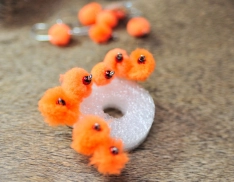
Trout beads aren't beads in the traditional fly tying sense but perfect imitations of salmon eggs and deadly efficient for rainbows. And they can be fished on a fly rod.
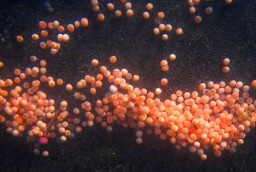
By now, anyone who chases steelhead, has heard about trout beads. Float fishermen of the spin-casting and center-pinning world have found much recent success in utilizing single trout beads under a float for steelhead. The same principles that float fishers use can be applied to fly fishing when using an indicator.
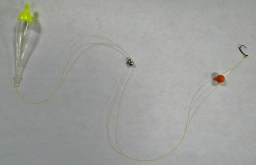
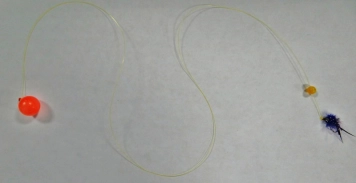
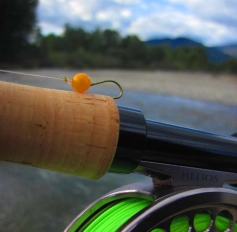
Here is how to utilize the same method on a fly leader using a thing-a-ma-bobber. In this particular setup the bead is used as an attractor to a stone fly, however, if you're brave enough to go against the conventions of fly fishing, you could also use just a bead and a bare nymph hook (We won't tell anyone).
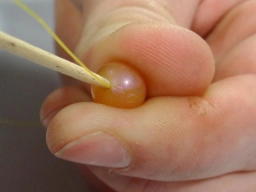
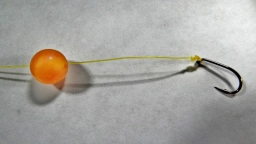
The bead is pegged to the line using a toothpick.
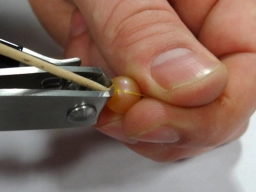
Clip both ends of the toothpick once the bead is pegged and slide the bead approximately 1-2 inches from the hook or fly.
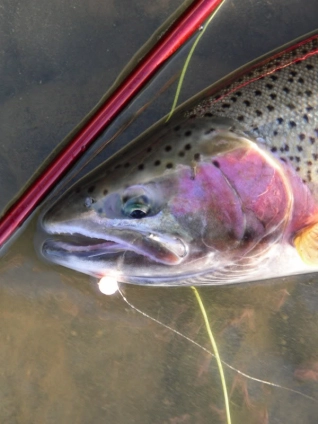
The beauty of catching a trout or steelhead on a bead is the fact that the hook usually ends up in the fishes lip, and not buried deep in the fishes throat, where a removal could potentially harm the animal.
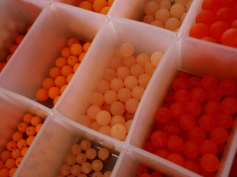
Beads come in four sizes: 6mm, 8mm, 10mm and 12mm. Choose the size and color of your bead based on the size of your quarry, as well as the size, and clarity, of the water your fishing. For smaller steelhead, like those found in creeks, where water is often gin clear, start at a 6mm bead preferably in natural colors. For salmon and steelhead on bigger rivers, or in high, or muddy water conditions, you would be better off using a 10 or 12mm bead in buoyant colors like hot pink, chartreuse or even green apple!
Beads work, and are a far superior egg imitation than the "Glo-bugs" and "Sucker Spawns" of the world, by leaps and bounds. Whether or not they can penetrate the fly fishing kingdom of acceptance is another story. With no actual tying involved, and the only material being the bead itself (and the toothpick if you want to count that toward craftiness), the bead may have an even harder time than the San Juan Worm, when it comes to being accepted by fly anglers.

- Log in to post comments
