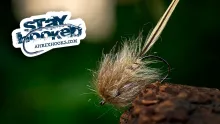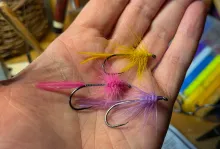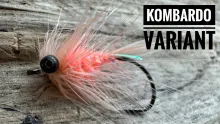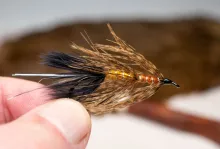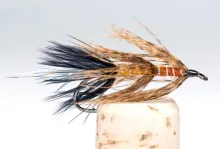
Magnus is a 'classic' on the Danish coast. This small anonymous fly and its very similar brothers the Frede, Sandshrimp and many others, are probably the most catching flies on the coasts of Denmark. The eyes and the palmer hackle are the prime characteristics of the Magnus, which is mostly used in clear water.
Notice that this description has been replaced by a newer and updated one.
Also notice this very thorough article on The Magnus and Fred Clan
Also notice this very thorough article on The Magnus and Fred Clan

Magnus
Even though one of my sons has the same name, it's not my own pattern. But it sure is a winner.
Magnus is a 'classic' on the Danish coast. This small anonymous fly and its very similar brothers the Frede, Sandshrimp and many others, are probably the most catching flies on the coasts of Denmark. The eyes and the palmer hackle are the prime characteristics of the Magnus, which is mostly used in clear water.
| Hook | 4-10, straight eye streamer |
| Thread | Tan |
| Tail | Two straws of flash and tip of hackle |
| Body | Natural hare or rabbit dubbing |
| Hackle | Grizzly, ginger, cree or the like wound palmer wise |
| Eyes | bead chain |
| Head | Tying thread |
- I tie in thread behind the eye and put on the eyes while it's there. Secure with varnish or superglue.
- I then cover the hook with thread, and tie in two (and no more than two) straws of clear flash almost same length as hook shaft right at the bend.
- I prepare the hackle feather by grabbing the tip and striking back the barbs of the rest of the feather.
- Tie in the feather pointing backwards over the flash and bend the rest of the feather backwards over the tip and tie down. The tip is half the hook length or a little more.
- Now dub the body to right behind the eyes and wind the hackle counterclockwise to the same point while constantly stroking back the barbs with wet fingers.
- Tie down the feather and cut and form a head with thread or thin dubbing.
This is a very simple pattern and it can be tied in a minute. It's effective in almost all water and reasonably durable. A rib will reinforce the hackle, but I prefer to change the fly when it's ripped after a number of fish. It actually catches fish even without the hackle.
The Magnus and its siblings can be tied as Bullet Head Flies.
- Log in to post comments