Recent comments
I love listening to your podcast's, good talks. A glass of wine and sitting at my bench tying up some flies while listening to your adventures is a good time.
- Log in to post comments
Martin
There's one other thing to add to the list:
a strong back to carry all these things
- Log in to post comments
Swellcat,
I have no idea what does the trick in furniture polish! The main trick is most likely to make the line water repellent, and for that any greasy or oily substance can be used. I personally prefer the silicone-based products such as Mucelin.
The effect of the furniture polish might also be smoothness and shootability. For that purpose there are line treatments, which improve the slickness of the line. Loon has some, and so do other manufacturers.
But personally I find the running lines smooth enough while floatability is generally lousy, so making sure the line floats is a priority for me. Any water repelling substance can be use for that: Mucelin, silocone for shoes, grease for gaskets and much more. I even know an angler who used hair gel! The gel is water-soluble, so I wouldn't go for that, but anyhow...
Hope this helps.
Martin
- Log in to post comments
An Australian vendor suggests Dacron (same stuff used for backing) treated with Mr. Sheen (a furniture polish, I gather) as running line. Any guesses as to what components of the polish are helpful and, therefore, what substitutes might be used?
- Log in to post comments
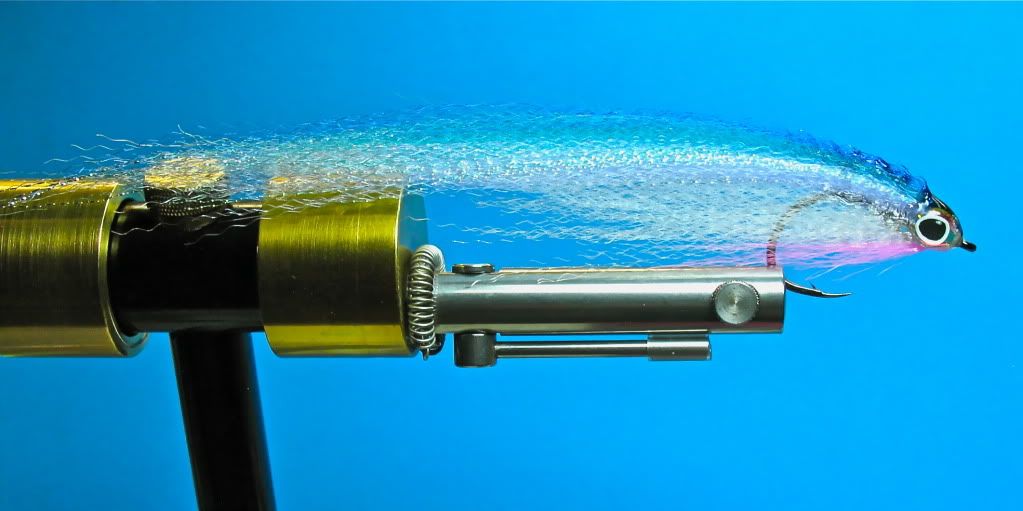
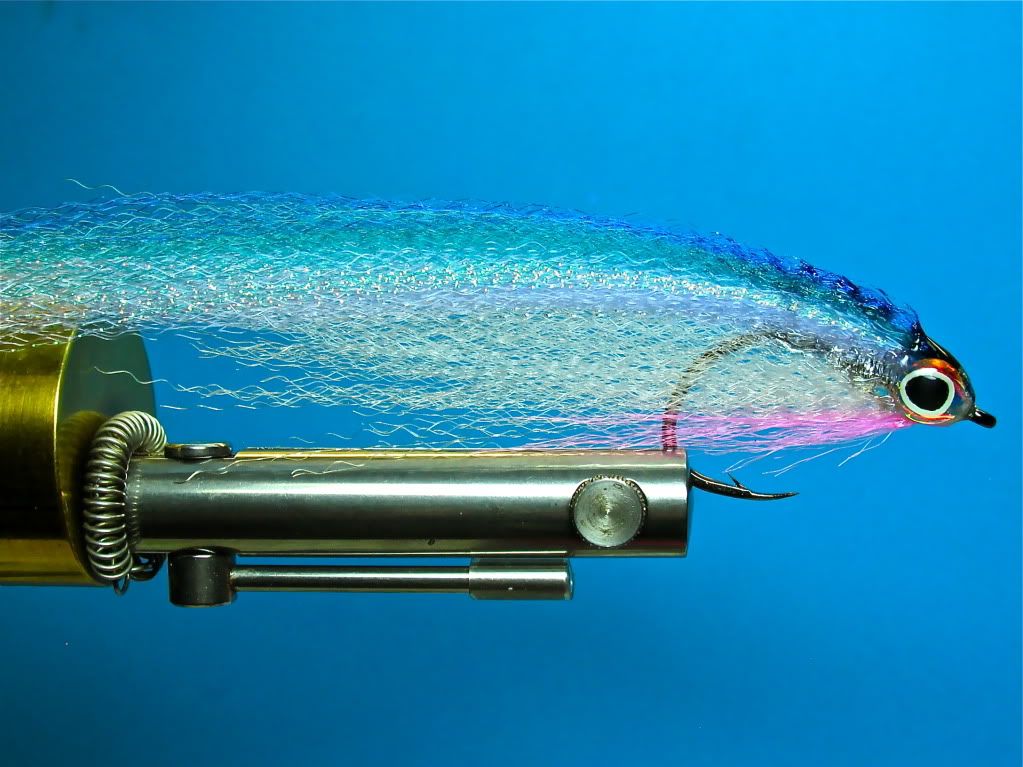
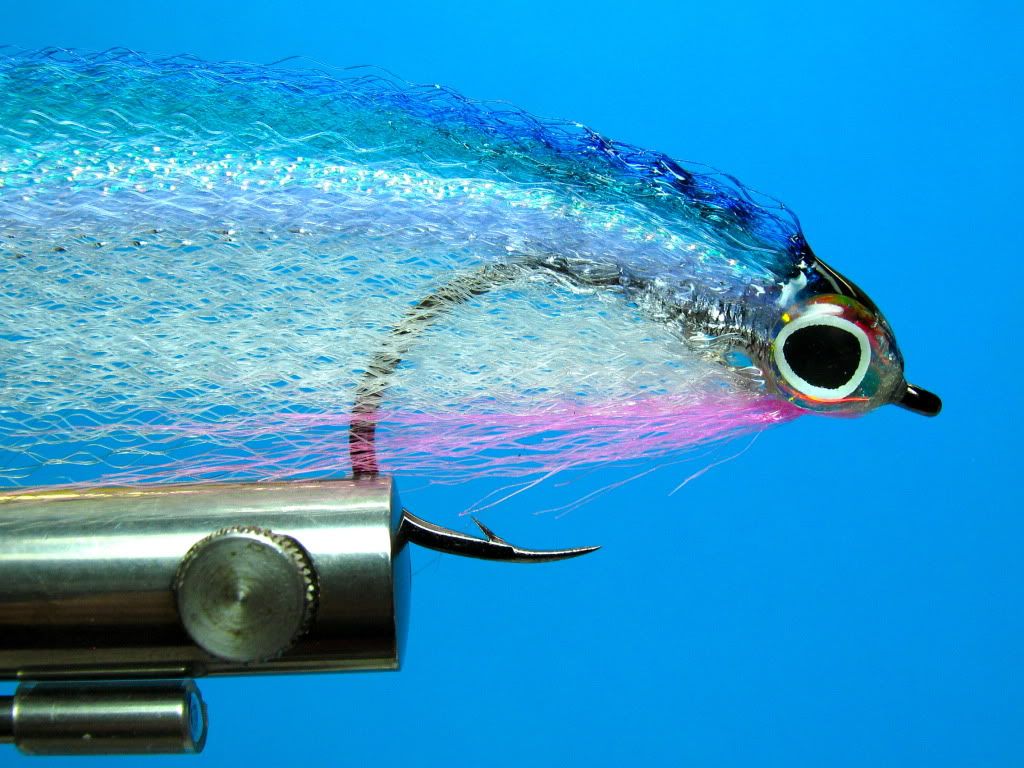
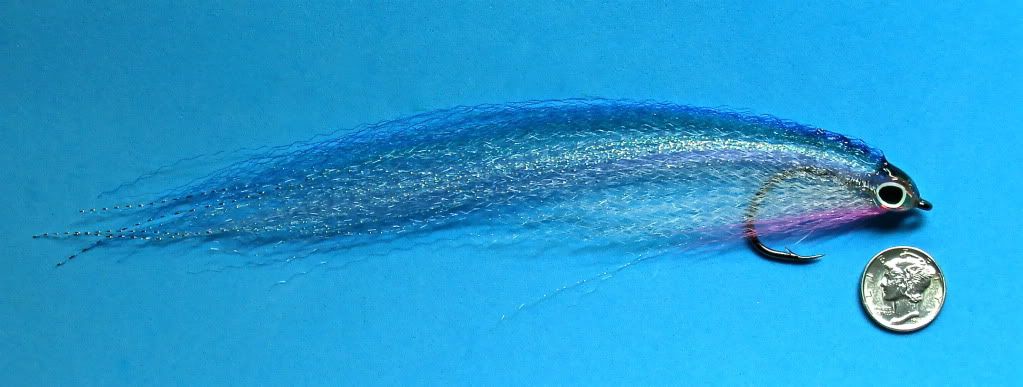
Bug-Bond, Super Hair, Crystal Flash, 3D Eyez... Bada BING, Bada BOOM...
http://i198.photobucket.com/albums/aa176/Phracas/IMG_8498.jpg
http://i198.photobucket.com/albums/aa176/Phracas/IMG_8494.jpg
http://i198.photobucket.com/albums/aa176/Phracas/IMG_8496.jpg
http://i198.photobucket.com/albums/aa176/Phracas/IMG_8503.jpg
'even a blind squirrel finds a nut... 'soonerorlater...
http://i198.photobucket.com/albums/aa176/Phracas/P6221528.jpg
- Log in to post comments
I received a signed copy of your new book, Fly Fishing for Striped Bass yesterday June 25th, that you gave to my son Chris Aubut, at the Fly Fishing Show in Marlboro MA. I want to thank you and appreciate your kind gesture, it is a beautiful book and will be a great addition to my library in Florida
Thanks Again
Will Aubut
- Log in to post comments
Dear visitor,
We have contacted some of the tyers and video producers and told them that we use their videos, but no - in general we don't have an individual permission.
But all the videos we brig are from services that offer embedding (the thing we do) as a part of their package and actually endorse that other sites use the videos as part of their content. The submitter of the video can usually protect the video from such an embedding in which case we can't use it.
You will find that this is a way of sharing that is used widely on the web, and contrary to images and photos, the whole video community is based on this form af spreading of the videos. If any of the originators asked us to remove their content, we would of course immediately do so.
Martin
- Log in to post comments
do you have the permission of all the fly tiers, videos you are using?
- Log in to post comments
Hi, Donald
Here is the receipe:
http://www.flytyingforum.com/pattern11608.html
Regards
Konstantin Karagyozov
- Log in to post comments
Can anybody recommend a good guide who can introduce an experienced fly fisherman ( my husband who has 15 years+ experience from the UK and US) to costal flyfishing in Denmark?
Kind regards,
C
- Log in to post comments
Hi. Maybe I am doing something wrong or maybe people out there are confusing mudfish with yellows. Someone posted that he had caught over 30 yellows in one day. I have not even caught that many all together. Plenty of muddies (maybe I am confusing them and I have caught more yellows than I think). Maybe I am fishing the wrong spot (Silwerstroom and Yellofish Paradise) or maybe my technique is off but I would be really happy to catch more than two yellows in one day.
- Log in to post comments
A very nicely dressed nymph, it is probably a very good fish catcher.
What have your catch results been like?
Hi, mate
Sorry for my late replay!
The fly is very successful.I use it most as a dropper.
"Works" in muddy and clear watter.
Regards
- Log in to post comments
Great to see all these together like this. Good work
- Log in to post comments
Thanks Bob! I've got lots more to add over the next little while as well. :)
- Log in to post comments
Thanks, glad you liked it. I enjoy making them.
The music is auto-generated using some old Sony software. (it can be a bit random)
So I can't tell you a title.
All the best
- Log in to post comments
Hello Martin,
www.artesanosdelacandana.com is the website of the author of the spanish book "La mosca ahogada".
He owns a small flyfishing shop near the city Leon in Spain and he also breeds the famous coq de leon-roosters for feathers used in lots of fly patterns.
In the summer of 2009 I fished a small mountain stream called Rio Curueno with Tomas as guide, a fantastic experience!
Greetings
Gino
Belgium
- Log in to post comments
I usually blank when fly fishing but used the diawl bach a caught 6lb 13oz rainbow!
- Log in to post comments
Nice video and great selection of background music!
Can you share title of instrumental?
- Log in to post comments
DW,
The book is still in the works, but I hope to finish it within a month or so. I keep on adding new patterns to it. Maybe I should just say stop and get on with it!
And yes, adding an intermediate or sinking leader to a floating head can make good sense. It can be a pain to cast, but sometimes the only way to get down to where the fish are, especially in running water.
Adding a sinking tip does add significant weight to the setup, and depending on the capabilities of you rod, it miht be a good idea to trim a bit off the shooting head itself. Personally I think I would make several heads, individually tuned for their tips, so that I knew that every single one would cast well. A completely flexible system might be difficult to create.
You can read about making really cheap shooting heads in my Fly Line Blues article.
Hope this helps
PS: thanks for the nice words about the site!
Martin
- Log in to post comments
I agree with Max, Furled Leaders are the way to go. They last a very one long time and they present a fly like nothing other. If you want to make them yourself, there is more than enough info on-line to figure it out. If your into buying them, just google furled fishing leaders, there are a few good companies selling them. I personally prefer thread leaders for dry fly fishing. Fluoro fo nymphing.
- Log in to post comments
We have sea run browns coming back to a few streams late in the fall. So I hope your book is out before then. I enjoyed the audio of your Feb head shooting trip. I learned quite a bit. I will be making some heads soon for easing the casts to stripers. Your article on heads is super. What about sink tips looped to floating heads? Does that make any sense? Backing/running line/WF F head/ various 3 meter sink tips /leader? If so,do I shorten the rear of the head by 3 meters to compensate for the sink tips? ....Damn nice site by the way DW New Hampshire USA
- Log in to post comments