
Many, many years ago, I suggested to French bead and cone maker Andre Bidoz that he should make some bottle tubes I had thought of. And he did!
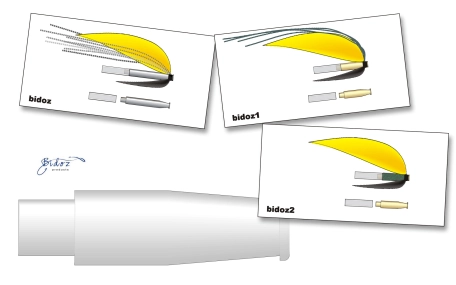
More than 25 years ago – more precisely in late 1999 – I made contact with French bead and cone maker Andre Fournier-Bidoz, who actually inquired about advertising on the site.
Andre’s business was being a “manufacturer of mechanical components for different industries", mainly small metal parts. Being a fly fisherman, he also produced such small metal parts for flies, mainly beads and cones, but also various eyes and other bits.
I can see from my mail correspondence with him back then that I already very early in our acquaintance suggested that he could make bottle tubes. At that time he may or may not already have had the Shumakov bottles in his assortment, but I was looking for something simpler that I had sketched at one point during my long love for tube flies. At that time there were some bottle tubes available on the market, like from Danish Fly Co and from Swedish manufacturers, but I had my own ideas for a design.
I wrote this in a mail to Andre in January 2000:
Andre replied:
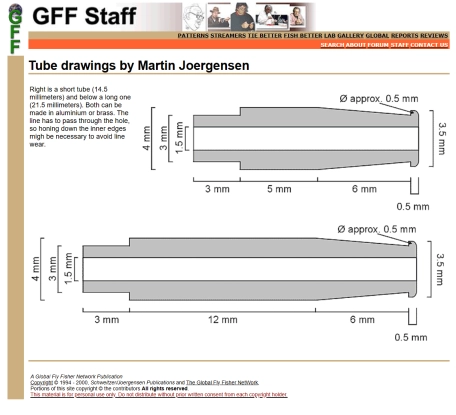
So I sent off a drawing. You can see it here
He wrote to me shortly after:
The tubes have had a great succes at Efttex show
I had prepared you some samples but can't deliver via EMS if I don't know your phone number
Please mail it to me and you'll received tha samples in a few days with a new idea I want your opinion on
regards Andre
After a short time Andre sent me some prototypes.
And I was very pleased!
Of course the tubes were exactly as I had drawn them. That’s after all what a good manufacturer does when getting drawings with measures. They make the product as specified.
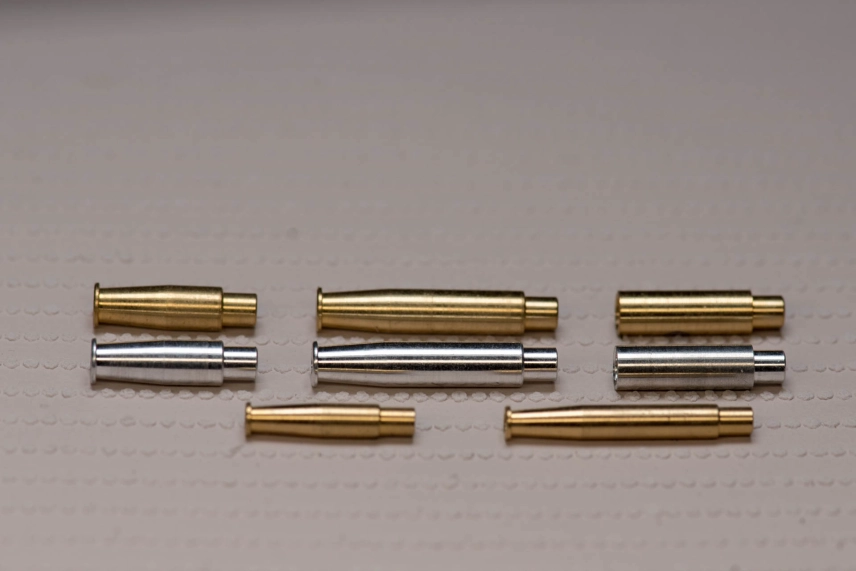
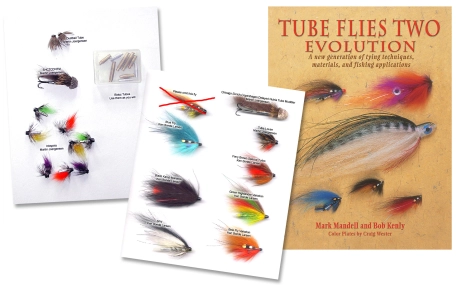
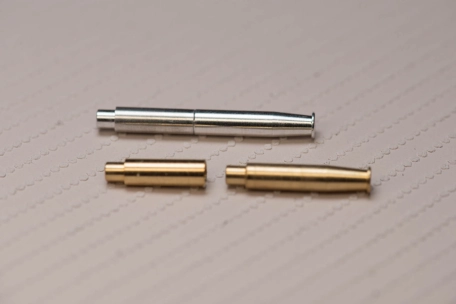
The tubes came in aluminum and brass and in two lengths, so basically a short and a long version in a light and a heavy variant, brass being significantly heavier than aluminum – pretty close to 3 times heavier, actually.
The hole was 1.5 mm, and a thin 1.5 mm inner tube made a perfect lining, easy to melt a collar on, poke through, trim and melt a second collar. Just as I had envisioned.
And they were great to tie on too.
The tapered part was long enough to have room for a decent wing and a hackle and a small head, and I could leave the body uncovered, or use dubbing, yarn, tinsel, floss or whatever to make a suitable body.
The rim in the front made it easy to control the head, and the narrower part in the rear had a perfect fit for a piece of soft junction tube to hold and guide a hook.
As it's the case with most tube flies, hooks for these short tubes have to have really short shanks. Luckily a lot of manufacturers make such hooks both for the specific purpose of being used on tube flies, and quite a few bait hooks will also do a great job. See the article "How to tie a hook on a tube fly" for more info on hooks and how to mount them.
The bottle tubes were short, so bodies were naturally short. The tubes were 15 and 22 mm long – or about 5/8 and 7/8 inches respectively.
Andre would later make level extension tubes, which fit over the narrow part in the back, making it possible to extend the tubes and even combine weights and lengths. The extensions are 14.5 mm long (about half an inch), and come in both brass and aluminum, and you can essentially make any combination you want – even using more than one extension piece.
Andre also sent me some cool anodized extensions, which showed the possibilities when it comes to coloring aluminum.
Later Andre would try to bring the colored tubes to the market, but they had surprisingly little success.
He had more success with a 3 mm (3/32 inch) version of the bottle tubes in brass, which makes it possible to tie some really small, compact but still heavy tube flies.
Martin Joergensen
So that’s my story about these tubes, and it essentially ends there ... except that the tubes are still available, can be bought a lot of places and seem to still have a good position in the market.
The reason for me to write this post at all was that I found the tubes for sale online, and went down the rabbit hole of finding them in online shops and see where they were for sale and/or being used.
... they are listed as "Martin Joergenssen tubes" ... yay!
This is the current selection as listed on the Bidoz website (where they are listed as "Martin Joergenssen tubes" ... yay!):
| Item | ⌀ (mm) | length (mm) | Weight (g) | Material |
|---|---|---|---|---|
| ST1B | 3.00 | 15 | 0.40 | Brass |
| ST2B | 3.00 | 22 | 0.68 | Brass |
| T1A | 4.00 | 15 | 0.35 | Aluminum |
| T1B | 4.00 | 15 | 1.03 | Brass |
| T2A | 4.00 | 22 | 0.56 | Aluminum |
| T2B | 4.00 | 22 | 1.68 | Brass |
| RT1A | 4.00 | 15 | 0.30 | Aluminum |
| RT1B | 4.00 | 15 | 0.98 | Brass |
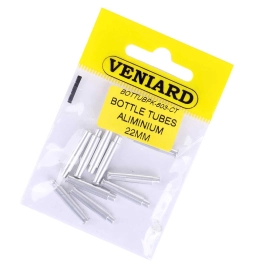
You will find them many places, not least because Veniard is distributing them – calling them Veniard Bottle Tubes & Extensions.
On the other hand Lakeland Fly tying calls theirs Lakeland Aluminium Bottle Tubes – even though they’re sold out at the moment.
My own preferred source for all things tube related is Canadian Tube Fly Company, which also lists the Bidoz tubes and supplies them in packages with both sizes and with a suitable junction tube included.
There’s a worldwide dealers list here.
I also found some videos where the tubes are used for various salmon flies.
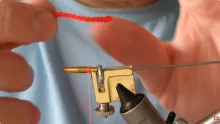
The tube in a video showing a Kola Bottle |
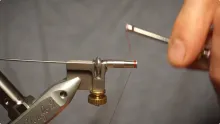
The tube in a video on the Willie Gunn |
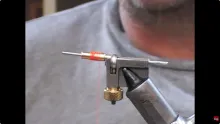
The tube in a video with Ryan Huston showing the Moy Special |
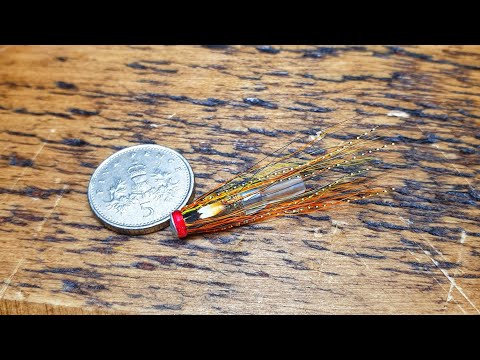
Willie Gunn

Kola Bottle

Moy Special
- Log in to post comments
