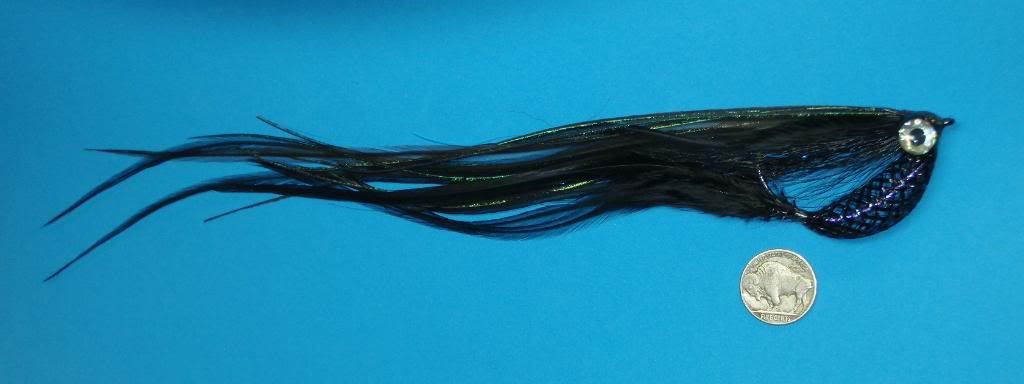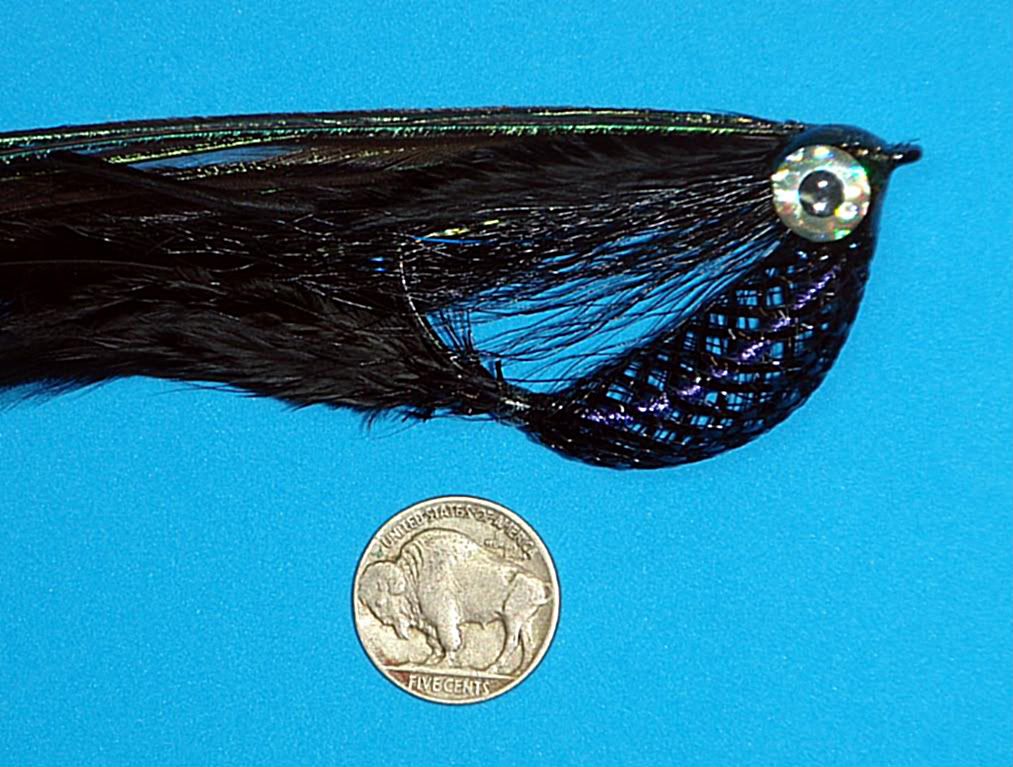
What a lovely post.
Recent comments
Jerry,
Yes, Rado's caddis is an excellent imitation, and certainly worth trying.
Regarding the reprinting of the article, you'd have to ask Radoslav himself, but the general rule here on GFF is that we don't reprint other people's stuff, and we prefer if they don't reprint our's. The web has enough unoriginal material floating round already, and repeating what others have already published once is not something, which we endorse. We would greatly prefer to see something new and yet unpublished on your site.
Martin
- Log in to post comments
That caddis larva was so realistic and so simple that even I could create it. I would love to put that article in my blog if you would grant me permission. I would be most happy to give you full credit for writing it. My site at Troutu.com has a link to GFF.
- Log in to post comments
Christopher,
Going for sea run browns in the ocean is something very Danish, which mainly takes place in the Baltic sea and the local Danish belts and sounds. It's my impression that a lot of this fishing has to do with the shallow, brackish waters we have, and my impression is that other places that have sea running browns - like the UK and Ireland - have very little fishing for these fish in the ocean.
This might have to do with the salinity, the way the fish feed, the depth or whatnot. I don't know. My guess would be that going for the sea runs in the estuaries or in fjords and bays with fresh water outlets would be the way to attack it. We're not allowed to fish in the estuaries, but fish do concentrate where there are spawning streams nearby.
Hope this helps you - and let us know how you do.
Martin
- Log in to post comments
Tobias,
You might consider the type of saddle hackle used for saltwater flies. These are generally large and long enough for tubes and soft in the fibers.
Hen hackle is rarely long enough to really do any good on a tube other than for front hackles.
You can also work your way though a bunch of rooster saddles in a shop. Some are very stiff, shiny and brittle while others are webby and soft. So called Chinese necks and saddles are usually quite stiff. I have rooster feathers from my own backyard birds, which are very soft and perfect for large flies.
Martin
- Log in to post comments
Martin,
I live in Newfoundland, Canada, and I pursue the elusive sea trout on a regular basis. I have been lucky enough to catch some beautiful fish up river during the late summer months but so far the fish have eluded me when they are at sea. The locals here catch them on all sorts of things when they come in with the tides into estuaries and tidal pools.
That's great, but I am far more interested in the Danish way of doing things. Catching sea-run browns in the salt water just seems so appealing to me. Do you always fish just outside of where fresh-water deposits into the ocean or woud you perhaps walk down miles and miles of isolated shorelines?
Our water may be a little deeper than denmark, this may be an issue...
- Log in to post comments
Cortney,
Two things:
1) You get what you see. There's no extra service, sending out further instructions. Unfortunately. We are a few guys doing this for free in our spare time, and such premium service is beyond our resources. Look at the flies and tie them in the color you want. You might lean up against the FMJNM, which is an almost similar fly.
2) You cannot buy flies from us. We're a magazine, not a shop. We don't sell anything. Luckily.
Martin
- Log in to post comments
Please send me a more indepth method of tying these different color zuddlers. . . Or as we like to call them in these South western Idaho waters- the neutralizer. We are running out and I'm not that good at tying yet, and i'm not really that interested in broadcasting it's efficacy. Yellow and Olive are most deadly, however these other colors that I've seen on this page have me somewhat fiending. We are also willing to buy directly from you. THanks C
- Log in to post comments
If you want a true fly fishing experience contact Coach Duff. We fish the fly exclusively, have professional guides on Kauai and Oahu are very honest about the challenges this fishery presents and sight fish exclusively. We do not make claims we cannot back up and we do not expect your trust, we earn it -- cast by cast. The head guide and owner is a FFF certified casting instructor, the only one in Hawaii and is a licensed USCG Captain, running a fully customized 18 foot Andros Boat Works Flats boat. We are sponsered by Burkheimer, Galvan, ExOfficio, Frog Hair, Smith Optics, Galvan and Monic. We offer airport pick up and free gear rental for outer island fly ins. We are featured in Destination Fish Magazine and Fly Rod and Reel magazines currently and will be in the new Catch Magazine. We do full and half day flats boat or walk and wade trips on either island. We carry a million dollars insurance, are CPR/1st Aid certified and take all major credit cards. Our prices reflect the legitimacy or our business, and the services we offer our valued clients, nothing more. We are not a cash only operation for this reason. We also offer world class views and lodging in Lanikai -- voted one of the top ten white sand beaches in the world EVERY year. We look forward to putting you on big bones and enjoying a day of sightfished, fly only, trophy catch and release bonefishing! Aloha -- Captain Terry Duffield, Captain Robert Tang and Rob Arita.
Coach Duff's Hawaiian Bonefishing
- Log in to post comments
This demon pattern works great up here in northern Wisconsin for smallmouth bass in the spring as they chase schooling minnows. Thanks for the pattern!
Wow! That's all I can say. I don't even want to think about how much a collection of flies of that quality would cost you.
The small trebles are used by scandinavian fishemen when the fish in the holes in ice during the winter. Try some email shops in Sweden, the have trebles down to #16.
- Log in to post comments
Arthur,
They come there by themselves... coastal cod will willingly take flies fished in the surface. Cod is known by most people as a deep water fish but it does go close to the shore and feed in the shallow water too.
Martin
- Log in to post comments
This is not simply dubbing was, although it can be used for that. It is cobblers wax. There are so many more reasons to use this sort of wax. It is not applied like newer waxes, rather you apply it to the thread prior to attaching the thread to the hook. Excellent article, I will make some up this week. Cheers!!
- Log in to post comments
things that go bump in the night...
estuary herring runs and outflows...floating line...dead drift to very slow retrieve...
http://i198.photobucket.com/albums/aa176/Phracas/P2230071.jpg
http://i198.photobucket.com/albums/aa176/Phracas/P2230072.jpg
- Log in to post comments
I am a Chilean beginner. I fished with a muddler-like fly and I did wonderful. Now, I am trying to tie it myself... I appreciate the tips. I will let you know how I have done!!!
- Log in to post comments
Guy,
To find the Cheap Lazy Bastard, use our search facility and you will notice that it's the first article listed in the results. Smart, huh?
And if you by email-distribution mean a newsletter, we have none. Subscribe to our RSS-feed or visit regularly to get the updates.
Martin
- Log in to post comments
Terry,
Oops! A small errror. It's fixed now. Thanks for the heads up.
Martin
- Log in to post comments