Shwimp

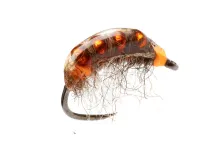
The Shwimp imitates a parasitised Gammarus shrimp, which is easy food for stream trout

No comments yetBy
Shwimp
Shwimp
Nick Thomas

Gammarus freshwater shrimps are an intermediate host for a parasitic worm which alters their behaviour causing them to stop hiding among detritus and swim in open water, where being more visible on account of the bright orange parasite, they get eaten by fish.

The Shwimp imitates a parasitised shrimp using a small orange tungsten bead within the body held in place on a length of copper wire and covered with a shell of narrow organza ribbon. The weight flips the fly to fish with the hook point and its legs pointing up, which is how the real ones swim. If you are wondering about the name, W is the atomic symbol for tungsten giving the shrimp its name as if spoken by Sean Connery.

It’s a good little pattern for trout and grayling sinking quickly down to where the real shrimps hang out among the gravel and stones. For grayling on big rivers in the winter I fish it on a dropper above a 3.5 or 4mm tungsten point fly. Once the trout season starts and I’m fishing t smaller rivers and streams I’ll use it on it’s own for dropping into plunge pools below waterfalls where trout wait for food to be washed down to them from upstream.
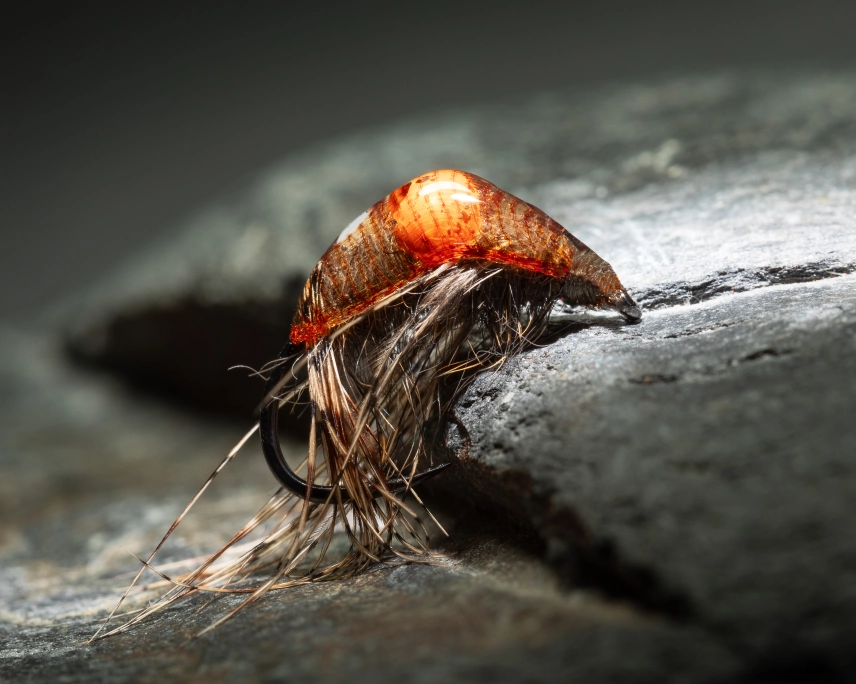
Clear orange spot
Clear orange spot
Nick Thomas
It actually turns over
Nick Thomas

Shwimp

Nick Thomas
Materials
Hook Fulling Mill FM50 65 #14
Thread 12/0 brown
Bead Get Slotted 2.5mm dark metallic tungsten on copper wire
Body Troutline natural squirrel dubbing
Legs Partridge
Shell 3mm brown organza or cream ribbon coloured with a marker pen, and finally covered with UV-resin
  1. Run on the thread, take down to the bend and tie in a piece of ribbon.
  2. Thread the bed onto a piece of copper wire and tie in the wire on top of the hook either side of the bead to secure it in place.
  3. Tie in a partridge feather at the back of the shank, dub up to the bead, wind the hackle forward and tie in.
  4. Whip finish and remove the waste feather and the thread.
  5. Reattach the thread in front of the bead and tie in a second feather.
  6. Dub the body, wind the hackle over tie in and trim off the waste end.
  7. Stroke the hackle fibres down, pull the ribbon over the body and tie in.
  8. Trim off the end of the ribbon, whip finish and remove the thread.
  9. Cover the ribbon with UV-resin and cure.
  10. Varnish the shell and head.
Easy
Fishing the Shwimp
Nick Thomas
Image gallery for Shwimp

Since you got this far …

A money box
The GFF money box

… I have a small favor to ask.

Long story short

Support the Global FlyFisher through several different channels, including PayPal.

Long story longer

The Global FlyFisher has been online since the mid-90's and has been free to access for everybody since day one – and will stay free for as long as I run it.
But that doesn't mean that it's free to run.
It costs money to drive a large site like this.
See more details about what you can do to help in this blog post.