A couple of questions..
is this in english and what is the best way to buy it? tried going to the production site but was unable to find it? Thanks for your great review!
Recent comments
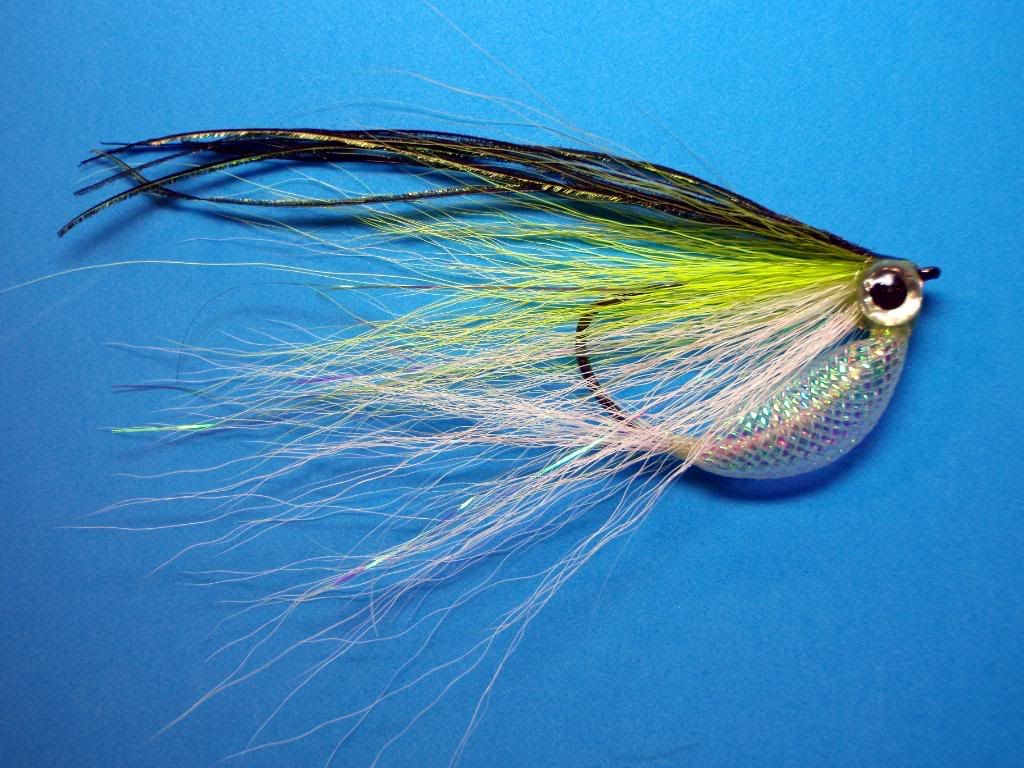
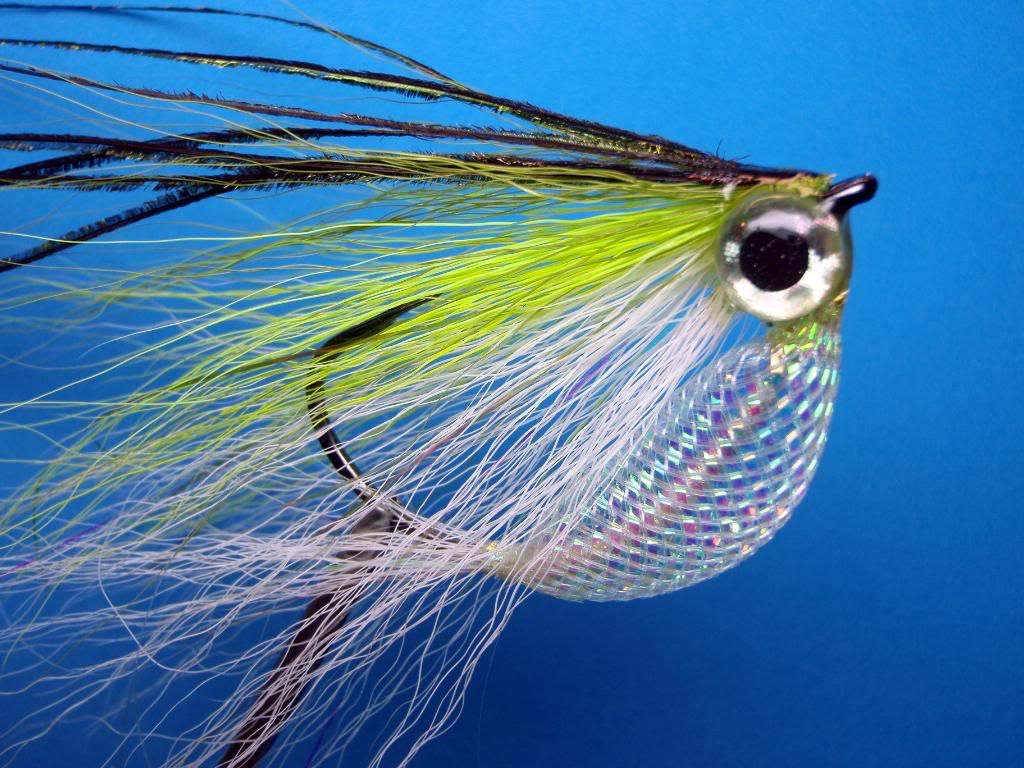
Some white/green/dk green DNA...a few strands of subtle green flash...3D Eyez...Tuffleye Finish...
http://i198.photobucket.com/albums/aa176/Phracas/P2110248.jpg
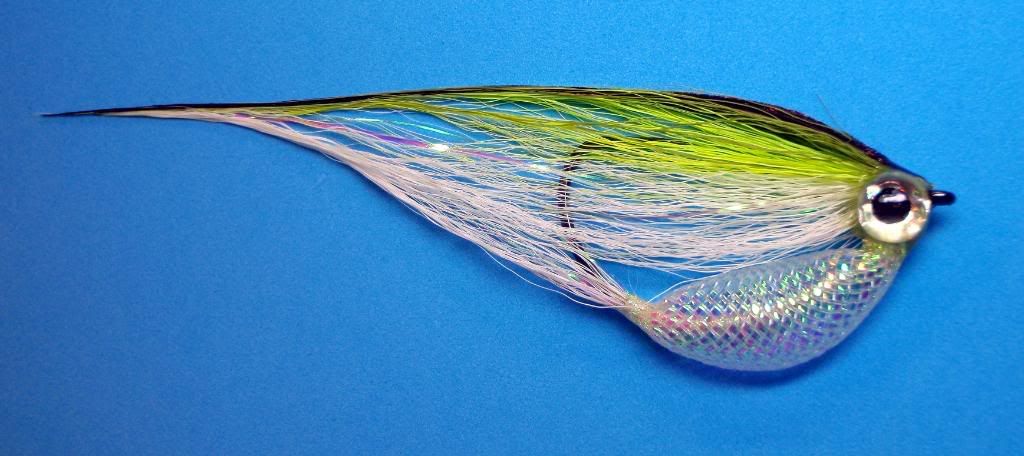
'slightly thinner with red foil eyez...
http://i198.photobucket.com/albums/aa176/Phracas/P2110045.jpg
Phor phinicy phats phish, sometimes smaller is larger...and subdued is brighter (as in smarter)...
http://i198.photobucket.com/albums/aa176/Phracas/P2130052.jpg
Don't be without a smaller (size 6 or so) Gartside softhackle streamer in white...you can do a google search for it..
Ulrik
Mr. Ray stood too close to the anti-matter-particle-generator...
http://i198.photobucket.com/albums/aa176/Phracas/P2080224.jpg
http://i198.photobucket.com/albums/aa176/Phracas/P2080223.jpg
http://i198.photobucket.com/albums/aa176/Phracas/P2080228.jpg
Badly bloated and mumbling incoherently, he soon came to realize his infallibility... :shock:
Salmofiliac,
I agree with Branislav.
Anything small and bright will do. Small is the key here. Use very small (for saltwater at least) and very sharp wet fly hooks in sizes 10 and 12. The garfish will see them, even in these small sizes.
Turn some orange yarn or dubbing on the hook. Maybe secure it with some ribbing - nylon line is fine - and do little more. Some flash if you are really wild.
Garfish aren't picky or hard to find - but they are very hard to hook.
Martin
this fly is easier to tie with an eagle claw bendback hook. I fish for striped bass on the new england coast and have had good success with it. For some reason, pink bucktail is particularly effective. Get Bob Popovic's book - Pop Flyes. It is terrific and will save you a good deal of money in tying your own. Much more satisfying when you catch fish with your own flies? Glad to hear they work on salmon.
Folks:
I am so sorry that many of you experienced no-show guides. I understand that the guide used in this article is no longer at Nervous Waters, so, I hesitate this article to be a specific recommendation for Nervous Waters as it is so much a destination article for bonefishing Oahu.
When I wrote the article in 2003, Nervous Waters was the only fly shop with a formal guide service. I understand there are additional and capable guides available now. A quick Google search will identify them.
Regardless of the guide service you use, this article is very applicable to Oahu bonefishing.
Thanks to all who have commented,
Steve Schweitzer
Martin:
I am preparing for my umpteenth bone fish trip soon and I still find this article to be sage advice. I always like to read and re-read it again to drill into my brain the importance of what you outline. I must say that being able to cast with windy conditions is one of the most important bonefish skills to have, only being superseded by being able to find & spot working bonefish in windy conditions.
Steve Schweitzer
Partner & CoFounder
globalflyfisher.com
I picked up an 8wt. 3 pc. last year. I mostly fish for small mouth bass on a large river in PA.
This rod has oversized recoil snake guides. Like you my wiggle test was not very conclusive.
Fished it quite a bit last year and wow. It has a nice med/fast progressive action that is wonderful for some of the big clousers and buggers. This is one of my go to rod any more.
Beautiful variants.
I've been working on a Ray's Spey Fly.
http://www.panix.com/~pg/flyfishing/stripermoon/raysspey.jpg
Thanks for the comment, I was a bit limited with the Canon G5, because it is a compact, albeit with SLR
features apart from the lens, but I now have a 40D with additional lenses so I will be experimenting. The 100mm macro lens makes a good portrait lens as well as the normal macro which I have used to take some insect pictures.
love anything like this,envy people that can draw and paint well done, When i start to paint with water colours i feel as if i should stick to painting back doors and sheds take care Jan Johansen
David,
I generally concur with Jerry in his post. Personally I have only few fresh water patterns in my box, and the ones I won't be without are:
- CDC&Elk - a caddis dry. An Elk Hair Caddis will also do
- Klinkhamer - an emerger type fly. Quite large, but very efficient.
- Hare's Ears Nymp - a universal nymph. I carry both with and without weight, and some really small ones too
- Copper John - a heavy nymph. I tie them a bit simpler than John Barr's original
- Some terrestrials - large hoppers, ants, beetles, many of them foam flies
- A few wet flies like Red Tag, March Brown and the like for the odd downstream swing
- Assorted local patterns depending on hatches, recommendations from guides, shops, fellow anglers etc.
Martin
To bad you feel that way about wet flies. I am 73 yrs old have been fishing Nymphs for over 50 yrs I also
teach Nymph fishing here in Michigan. I started using the old stile wet flies last summer, like the wickams
fancy and the winged hares ear and a few more old patterns, I am a guide here on the Muskegon river and
my friends thought I was nuts to use them old flies. I never caught so many nice fish, some 20 inch browns
and rainbows. I can tell you one thing it's not the flies that are so effective it's the way you fish them, that
makes the the big difference.
Thank you for these great suggestions. I plan to build my first home made shooting head tomorrow.
Do you have any suggestions for fly casting from a kayak?
If you ever plan a holiday in Florida, contact me. I'll take you fishing.
David:
Two that I would have in my box, actually have in my box would be the CDC and Elk and the Usual. I also carry a pattern loosely based on one called Quigley's Cripple/Emerger. Another pattern that's worked for brookies up in Vermont is one called the Nalle Puh. If you don't tie, you might have trouble finding these, though the Quigley pattern might be available on line or in catalogs, and it's possible the Usual may also be available. My nymphs are pretty limited. Pheasant Tail Nymphs tied with a bead head and soft hackle in Natural, Olive and Brown. Some hares' ear nymphs tied the same way and the old Pennsylvania standby the Green Weenie.
The drys are range from size 12 to size 20. The nymphs range from size 12 to 26.
Dear Martin, in fact fishes are most important ,even i you put them to the water.Most important is biting and draging. We still hunters. Best wishes