
Tying instructions? Materials list?! You must be kidding me! The list is close to being an insult and it is almost ridiculous to tell you how to create this fly in more than a sentence. This little saltwater fly is soooo simple.

Tying instructions? Materials list?!
You must be kidding me!
The list is close to being an insult and it is almost ridiculous to tell you how to create this fly in more than a sentence.
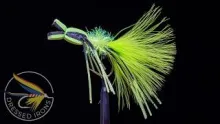
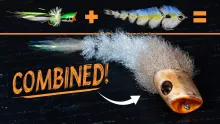
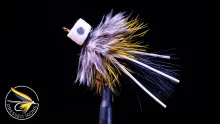
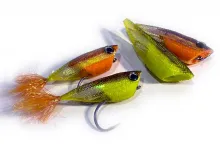
Stick a hole in the popper head and press the already superglued hook through it. The fly is ready to fish.
"Now", you probably ask yourself, "What is this excuse for a fly supposed to catch?". And the answer is garfish. The European kind - like tropical needlefish, just smaller. Garfish are very common in most waters in Northern Europe, and arrive in huge numbers each spring in particularly the Baltic area, where they spawn.


Popular fish
They are a very popular quarry and attract a lot of anglers to the water. They are usually numerous and easy to catch, and a perfect target for the fly angler - especially the beginner who wants to try the feeling of catching a fish in the salt. Garfish dont' require much finesse. Short, clumsy casts are fine, and precision is of little importance. Armed with a light fly rod and some small orange flies, it's difficult to go wrong with these fish.
The fish are usually easy to get to strike on flies. To get them to stick on the hook is a lot more difficult. Their hard bills can only be penetrated by the smallest and sharpest of hooks.
People often use small wet and dry fly hooks down to size 12 and 14, and the garfish are actually known to take flies, which are fished dry in calm weather.
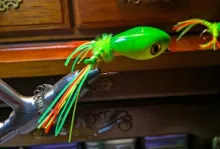
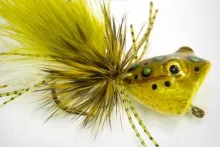
That is why this funny little popper has seen the light of day. I had some small orange and yellow popper heads stored in my material drawers, and these heads in combination with some small stainless Partridge hooks were all I needed to "tie" the PropPopper.
Hard to hook
I was going for garfish the same day that I tied the first of these flies, and the fish definitely loved them. The bright fly was easy for me to see on the surface when I stripped it in, and garfish were anxiously following the streaming fly and struck time after time. But on my first outing with this new pattern I had none stick on the hook long enough to get them to my hands.
None!
But I don't blame the fly, because my usual lethal weapon for garfish - the small, orange flies - was equally bad at hooking the fish.
I had fun just the same, which is what this is mainly about, and on most days you can land more than you asked for.


The final insult
And OK, I'll insult you and give you a few more details on the construction of this fly:
Use a small (real small), closed cell foam, cylindrical popper head and a straight eye, straight shank streamer hook size 10 or smaller.
I use Partridge's stainless steel Aberdeen hooks and small popper heads from Rainy's Flies & Supplies in Logan, UT originally intended for panfish poppers. The smallest size is 1/4" or 5-6 millimetres in diameter. They are suitable for the purpose.
- Press a needle through the popper head from end to end, off center and close to its edge, still without weakening the material.
- Dab a drop of superglue on the center of the hook shank, and press its eye through the newly pressed hole.
- Make sure the popper head is rotated on the hook shank so that the hook bend is down and the major part of the head is up. This ensures that the hook point has as much room as possible.
- Let the glue set, and you are ready to fish.


- Log in to post comments

Red and white bobber
my son would use a tiny red and white bobber with a hook tucked in close for frogs and bluegills.
there he was 3 years old with a snoopy rod outfishing me, just as he does to this day.
to duplicate the popper/bobber we would drill out flipflops with sharpened brass tubes and impale the foam on a hook. works great.
I live in the U.S.
I live in the U.S. Midwest and have fished these inland rivers well over 40 years now and Gar fishing {was} my best kept secret I have spent many happy hours fishing for these so called trash fish we have short and long nose Gar in the Northern states with some Alligator Gar and they fight as well as any bass,trout or northern Pike I've ever landed. I still fish bass and trout and the like - however when the fishings slow and Gar are rolling [ feeding ] along the banks of my home waters you can bet it's only - Me - my fly [with that # 8 or 10 hook] and that magnificent Gar "Pike" - hopefully on the end of my line. I would agree foam body flies are the way to go for Gar they are quick easy ties for only pennies.
You could add a tail, but why?
Anonymous,
Sure you could add a tail, but why? The fly works as it is and requires no thread or tying. A tail may look nice to us, but the popping action is fine without and the fly much easier to make without.
Martin
A tail?
couldent u add a tail like marabou?
Fun with these poppers
Well I have lots of fun with these poppers, I tied them in yellow, fl pink, hot orange.
Great also for shads and when the mackerel is close to the shore well keep your eyes open before you get scare to dead ;-)
they are good fun on
they are good fun on light tackle, go down to a #4 and you have some real fun, just hope a mackerel wont hit it, lol
they didnt really bent my 5/6, but as a sidecatch they were fun.
an old trick to find garfish is to throw a few pieces of wood/dead branches on the water, for some reason garfish will jump it
a few thoughts, if you do C&R, do NOT touch the fish, it WILL die, they are a fragile fish, if u intend to eat it, plz do, its a good tasting fish, dont be scared of the green bones, when filetting, its not been near a waste dump, its supposed to be like this
I had never thought
I had never thought of gar as a sport fish, iv'e only ever seen them used as aquarium fillers.
Thick foam from an arts and crafts store
If you cant get your hands on a small panfish popper, you can buy thick foam from an arts and crafts store and simply bong them together with superglue to make your own array of colorful custom poppers