
The Cuteling is called as it is because it's cute! It's also a small and easy sculpin imitation
The Cuteling is called as it is because it's cute!
And because it's a very good imitation of a sculpin, which is called a kutling in Danish.
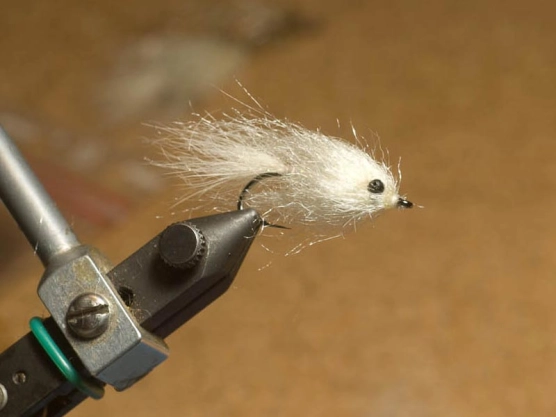
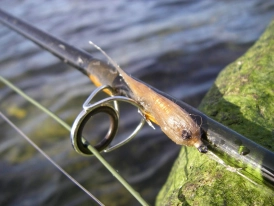
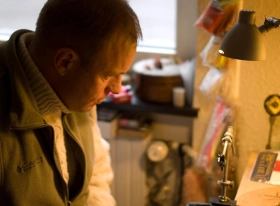
Now, cute doesn't cut it when it comes to imitating baitfish and catching more fish, but this fly is more than cute. It's actually also very identical to the natural.
It's a simple fly to tie, uses easily accessible materials and can be varied endlessly to look like any small fish. The tan color is a natural choice for the sculpin lookalike, but choose a combination of gray and silver to get a small pelagic fish, olive or black to get close to a darker type of fish, and white to get... well, a white fish. Rare in real life for sure, but white flies seem to work well, so a white variation may be worth having in the box.
You can of course simply make the tail one color and the body another. You can also mic dubbing of dark and bright colors in the loop to get a veriegated look.
If you want to be really artistic, your can break out your waterproof markers and start designing all kinds of color variations.
As is the case with many of Ken's other patterns, the Velcro stick is an important tool when tying the Cuteling. When you dub traditionally or use a dubbing loop like on this pattern, the result can typically become very fluffy or very tight. Some tyers can get a perfect body just dubbing, but the rest of us will have to use the Velcro to brush things in shape.
By combing the materials with Velcro while tying and after the fly is done, you get a more uniform shape and a smoother and more translucent look. And don't restrain yourself! You can be rather tough on the fly with the brush. As long as the dubbing has been applied firmly enough, the amount of material that you comb out of the fly is limited.

Instructions
|
|
|
|
|
|
|
|
|
|
|
|
|
|
|
|
|
|
|
|
|
|
|
|
|
|
|
|
|
|
|
|
|
|
|
|


- Log in to post comments


Great pattern
Great pattern
Plan to use it for Sea Bass and hopefully Sea Trout here in UK. Havn't been able to find STF here any advise on an alternative or a UK source for STF
This pattern is Great
This pattern is Great! I tied up a few and took them out tonight on the incoming tide and caught several nice Coho Salmon on Puget Sound.
I used Angel Hair as listed in the original recipe, I just cut it to fit the dubbing loop.
I have a pattern I use for Chum salmon in the fall, only I find the addition of the tail gives it a more fishy look in the water.
Thank you ! I will be twisting up some more of these to have in my box can't wait to try them in the local rivers for sculpin eating trout.
The material is STF
Daniel,
The material is actually STF fibers (Synthetic Translucent Fiber) and not Angel Hair as I had first written. Ken Bonde tells me that SLF will also cut it, and Angel Hair might also. But Ken's own flies are made from STF
Sorry about the confusion!
Martin
Angle Hair?
Is this really angle hair did he twist in the loop for the head?
A killer for perch
Look like a killer for perch and also zander down here in Holland, thanks for the share !!