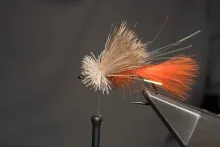
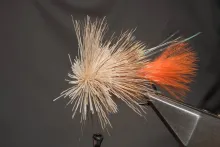
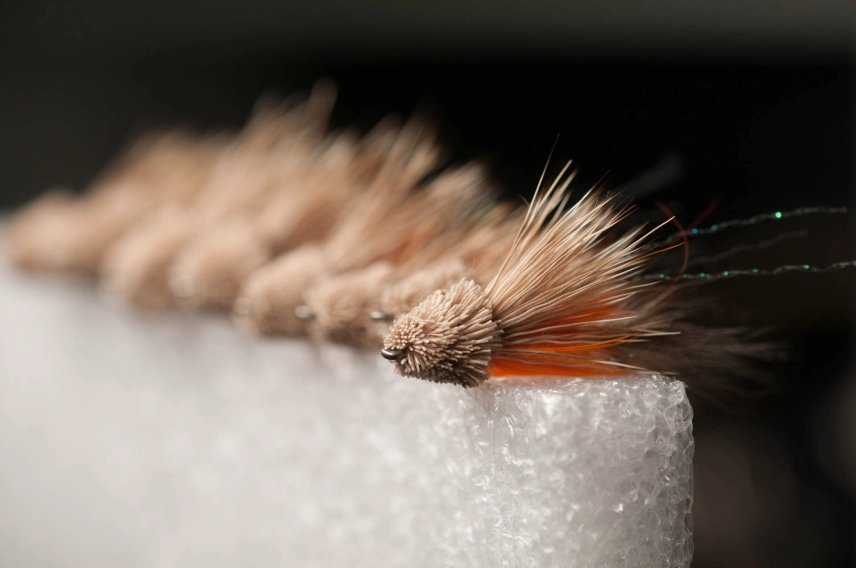
A small muddler with a dab of orange that’s come out of my vise many times in many versions, and is a good example of a high-floating trout fly
I have to excuse myself to all the readers who have been regular visitors on this site for many years. They might be growing just a bit tired of my muddlers.
I have a very weak spot for these deer hair flies, and whenever I don’t know what to tie, I often end up cranking out muddlers.
I love tying them, and I love fishing them.
Stirbay ... what kind of name is that?
This particular muddler didn’t have a name for a long time.
I had tied it many times, but it’s kind of generic and nothing new, so it didn’t really get a name.
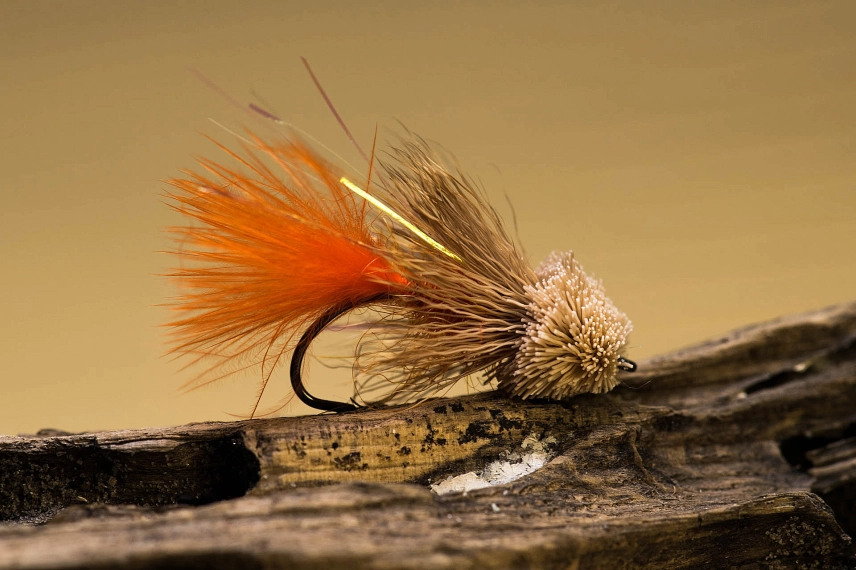
I just called it the orange muddler, even though it’s also tan, and many variations only contain very little orange. But it's the orange that sets it apart from my usual Small Muddlers, which are mostly tied with black or tan wings and tails.
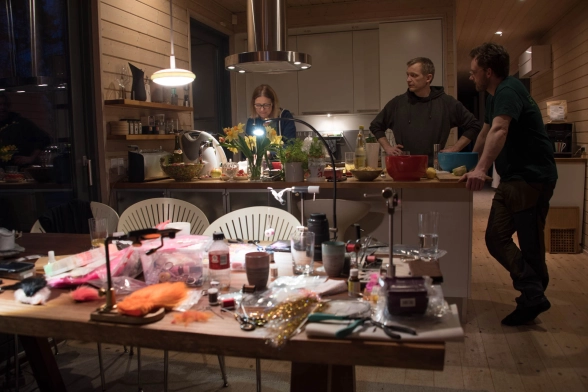
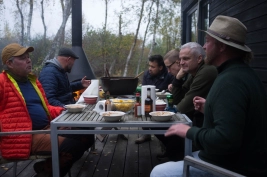
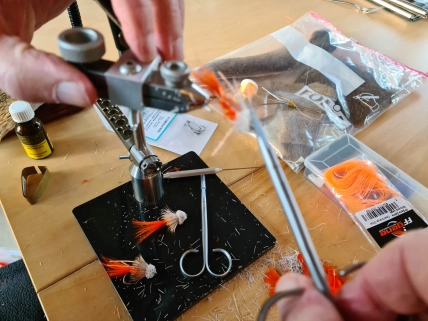
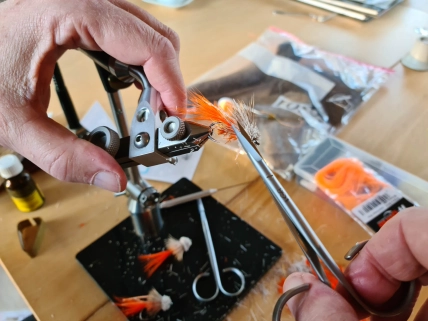
At a gathering with fellow fly anglers, which took place in good friend Katrine’s summerhouse, I decided to crank out a few more.
I always joke about how I make sure to tie muddlers when I’m away from home. This leaves the cleaning to someone else, and saves my own tying space from being littered with deer hair clippings!
This particular summerhouse is in a Danish location called Rørvig.
Vig means bay or fjord, and it is indeed very close to a large fjord, and rør is the Danish name for reeds, so it’s the bay of reeds, which makes good sense since we often see reeds in the shallows in the Danish brackish fjords, much like you’d find it on the banks of a lake.
But rør also means stir in Danish – like stirring in a pot or your coffee. So rør + vig became stir + bay, and the fly was named the Stirbay Muddler.
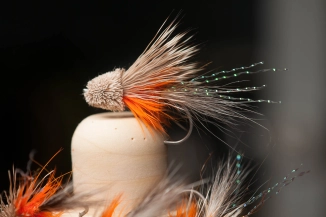
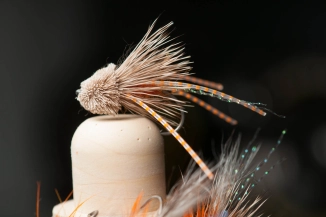
Various incarnations
The fly has been tied in a number of variations, and has been adorned with both flash and rubber legs. The orange streak has been in the tail as well as in the body and in a hackle, so it’s definitely not a pattern that’s set in stone.
The most recent version is the one that’s earned the name, and the one you get the prescription for here.
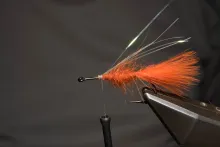
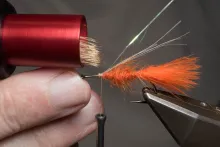
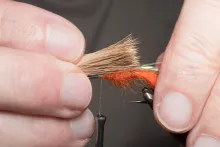
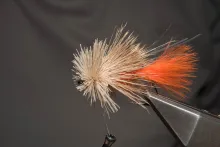
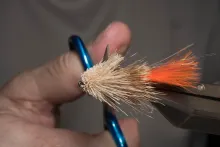
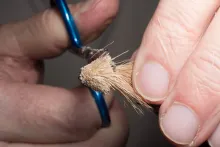
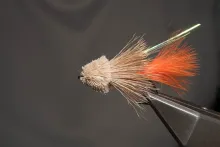
This version has a natural deer hair head, a bit of flash as a wing and an orange tail made from marabou.
Personally I also like the version with orange rubber legs, and you can see pictures of it here. If you want to tie that version, just add a few strands of rubber legs in stead of – or as a supplement to – the flash.
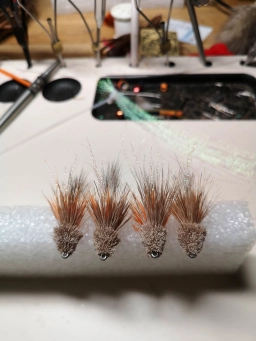
As always a key to the success of muddler-tying is getting some good deer hair. We have lots of information on how to get a hold of that here.
|
|
|
|
|
|
|
|
|
|
|
|
|
|
|
|
|
|
|
|
|
|
|
|
|
|
|
|
|
|
|
|
- Log in to post comments