
With such a name a fly has to be good. And this one is. The Super Pupa is a killer pattern! Different, simple to tie, and very efficient.

Back in 1977 Swedish fly-tyer and fly-angler Lennart Bergquist was fishing on the Norwegian river Rena together with Kenneth Boström, Jan Sekander, and Preben Torp Jacobsen - all of them grand old men in Scandinavian fly fishing as is Bergquist himself.
They spent some time
studying hatching caddis, and Bergquist started developing a swimming caddis pupa that was supposed to imitate the pupae making their way towards the bank to hatch.
It took some years
for the fly to find its final shape. In the beginning the imitations featured all the traits of the natural like wing buds and naturally positioned legs, but during the early 80's it took the much simpler form that it has now.
The final version
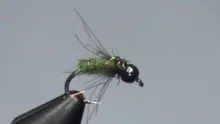
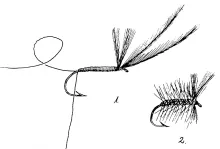
of the fly has one main purpose: to imitate the impression that the pupa leaves in the water. It also has the colors of the natural, but its main strength is its very special shape. The shape of the fly doesn't immediately resemble any caddis pupa or any other natural for that matter, but its trimmed hackle and overall shape makes it leave an impression that the fish like. The hackle selected for the fly is typically larger than it would be for a similar dry fly with a full hackle. Bergquist himself recommends a hackle for one hook size larger than you are tying. I usually go for a hackle with barbs about 1.5-2 times the hook gap.
Bergquist simply named the fly
"Floating Caddis Pupa", but a friend of his - Bengt Öste - tried it and realized its potential and dubbed it Superpuppan (sometimes spelled Superpubban) in Swedish - The Super Pupa. That has been the name of the fly ever since.
It's a very popular fly
in Sweden and Denmark in particular, but has also found its way to the rest of Scandinavia as well as the UK. But apart from that the fly isn't found in many fly boxes, which is a pity when you consider its efficiency, how common caddis are and how easy and simple the fly is to tie.
|
|
|
|
|
|
|
|
|
|
|
|
|
|
|
|
|
|
|
|
|
|
|
|
|
|
|
|
|
|


Fishing the Super Pupa
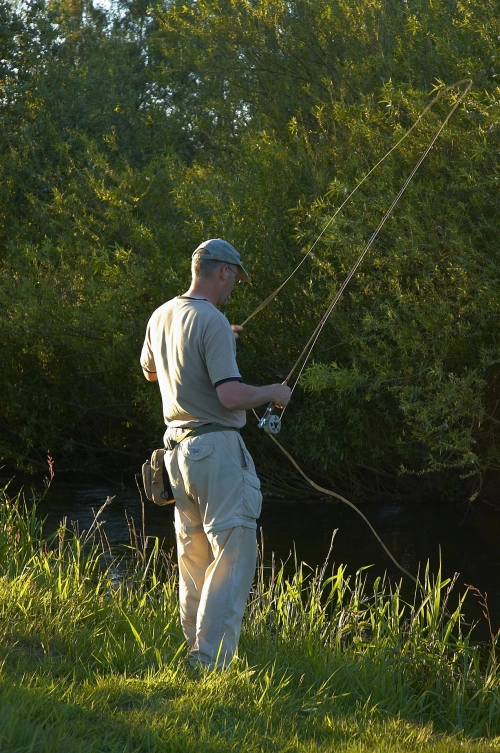
The fly can be fished dry as any floating fly. It's a good floater thanks to the two rows of long hackle fibers. It lands perfectly 99% of the time, and treated with some floatant and dried off using an amadou patch or dry shake it can keep on floating for a long fishing session.
You can strip the fly to create a wake. It is after all an imitation of a swimming, hatching caddis pupa. The pupae will drift with the current, but make their way towards the bank, and fish can often be lined up close to the bank when such a hatch is going on. Bergquist notes that this particular swimming behavior isn't that well known and that it's rarely imitated, and he has also described some fine fishing where the Super Pupa was just dead drifted.
The fly is also known to work well as an attractor when no hatches are going on, and grayling in particular seem to be easily tempted by a Super Pupa passing over them.
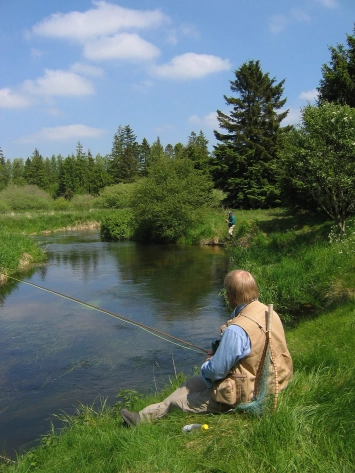
My own personal successes with the Super Pupa has been on grayling waters where these beautiful fish seem to be willing to rise from quite deep water to engage with a dead drifted Super Pupa.

- Log in to post comments



i fished the crackle back
i fished the crackle back which is similar to the super pupa but not the same.the crackle has caught me alot of trout when nothing else would work on the river.i will be tying the super pupa,because of the close resemblance to the crackle and i know it will catch fish.looks like a killer pattern to me,thanks for the info.
Gary Soucie's book has this pattern
Gary Soucie' book Wooly Wisdom actually has this pattern ive tied and fished it here in Maine and done fairly well on local waters, definitely not the killer here in the states that it is in Scandanavia.
On the surface they look the same
Robert,
On the surface they look the same, but Ed Story's fly uses white turkey for the body and has a back made out of peacock herl. The way the hackle stem contrasts the body to form a rib makes them look somewhat similar, but the hackle on Story's fly isn't trimmed, which is a very significant step here. Ed Story's fly is often called a "dry Woolly Worm", and looks more like that than it looks like this fly if you ask me.
Martin
Storey Crackleback
Very similar to the Storey Crackleback.
Rena is back in Norway
Everybody,
I'm very sorry about placing the Rena in Sweden! My bad...
It's been fixed, and the Rena is back in Norway.
Martin
Norwegian river
Hei Martin,
The Rena is an Norwegian river in Hedmark.
Best regards, Peter
In Norway
Rena river is in Norway.