Holding short bottle tubes or other metal tubes firmly in the vise can be a problem. Here are some tools and tips for making it work.
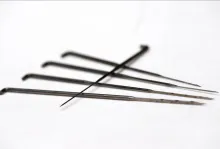
When tying tube flies on plastic tubes, it's mostly fairly easy to find a tool to hold the tube in the vise. There are a large number of dedicated and generic tube needles and a host of other tools designed to hold the tubes firmly. The plastic is soft and allows for some squeeze or deformation, and that enables you to get it to sit in quite a variation of tools through friction alone.
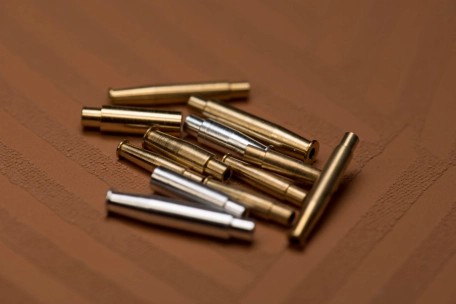
Not so with metal
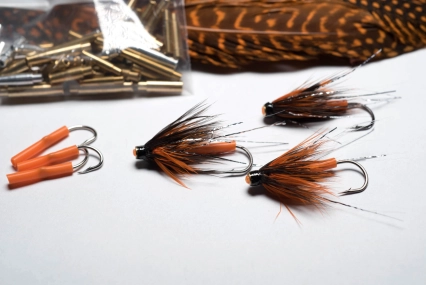
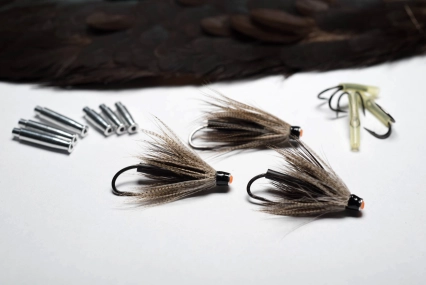
Tying on metal tubes is something different. These tubes are hard, and won't sit by friction alone. Pressing them over a tapered needle might result in a reaffirming fit, that feels rock solid.
The problem is that it isn't!
It will typically slip very suddenly, and the tube will spin freely on the needle, unraveling all materials faster than you can imagine.
I literally have dozens of tube fly needles from many different manufacturers, and none of them will hold a metal tube properly. A few will do a slightly better job than average because they have a very "gentle taper" and will grab the tube better, but once you start tying on it, the tube wiggles and eventually looses grip. You will have to constantly press it back onto the needle while tying.
The tools that rely on a lengthwise pressure, drawing two parts together pressing on each end of the tube, won't fare much better. No matter how tightly you clamp the mechanism, metal-on-metal contact rarely provides enough friction to hold the tube, and even the smallest amount of play in the tool will allow the tube to spin freely.
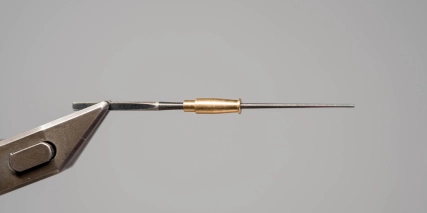
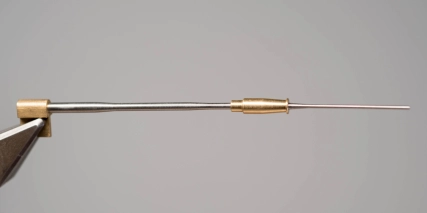
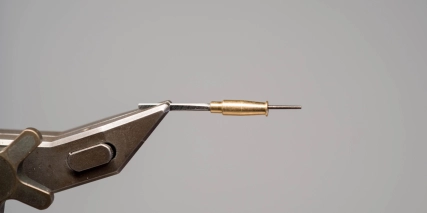
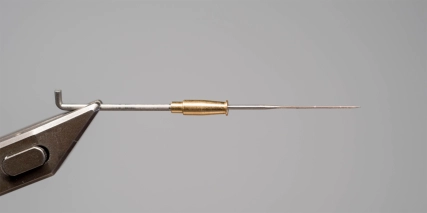
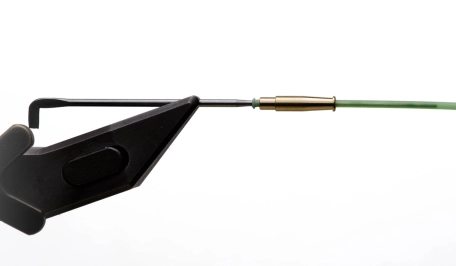
Since many metal tubes need to be lined with plastic before fishing them, it might seem like a solution to do so before tying. Then you have the softer inner tube to stick on a needle.
And that may work for some tubes, but the narrow bottle tubes with inner diameters of 2-3 millimeters require very thin inner tubes, and they simply don't fit over any suitable needle.
Needles that go through the small hole in the plastic liner are often too thin and wobbly to be practical, and the metal tube will also have a tendency to rotate around the plastic tube unless the fit is really tight.
Special tools are needed
So it's time to dig out something that's a little more complex than the otherwise really effective needle.
I have several tools in my fairly large collection of tube tools that work really well for metal and bottle tubes:
- The original HMH Tube Fly Tool (correction: I used to have one, but it has disappeared for some reason).
- A copy of the HMH tool - made by German Würm.
- Danish Fisker tube tool, later available from Futurefly, but now difficult to find.
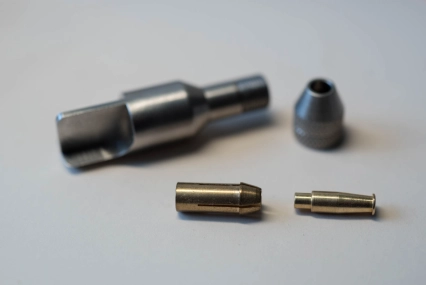
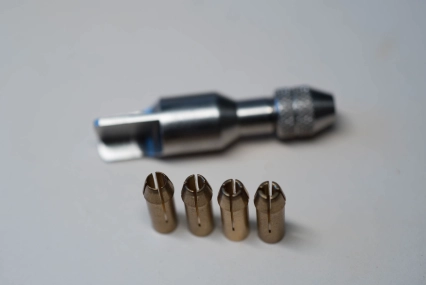
- A Russian tube chuck (like a small drill chuck) - maybe brand named Tersky Bereg.
All are meant for mounting in a vise, and all work like a charm for any metal tube as long as it fits over the mandrel in the HMH-style tools or in one of the chuck inserts in the Russian tool.
You can also get dedicated vises with various mechanisms to hold the tube. A few have chucks while others are based on squeezing the tube. Again the latter will very likely not work for unlined metal tubes. I cannot be 100% sure of this since I haven't tied on any of these vises. You will find options from several manufaturers like Renzetti, HMH, Stonfo, Futurefly, Cascade Crest, Regal, Dyna-King and others, but do check with a metal tube before buying - or simply buy an inexpensive adapter that fits in your current vise and does the job well if you want to tie on metal tubes. The tool will also work well for plastic tubes.
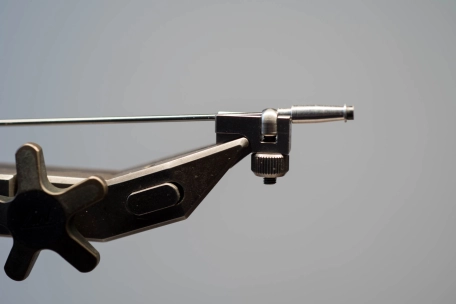
HMH-style tools
The HMH is the classic ur-tool for holding tubes, and has been around for as long as I remember. I used to have one of the original tools - and very likely still have it somewhere, but it's lost in the depths of my piles of flytying stuff.
The German Würm tool works the same way and is an equally sturdy piece of kit, while the Fisker/Futurefly tool is plastic, and although being an excellent tool, not quite the same quality os the full metal counterparts. Futurefly now has a metal tool too.
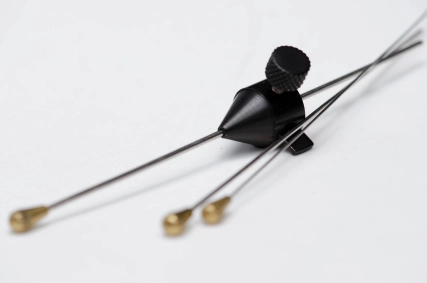
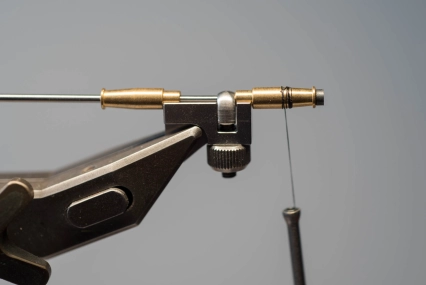
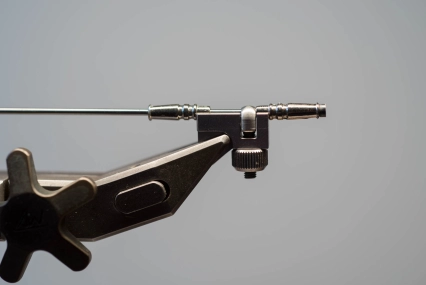
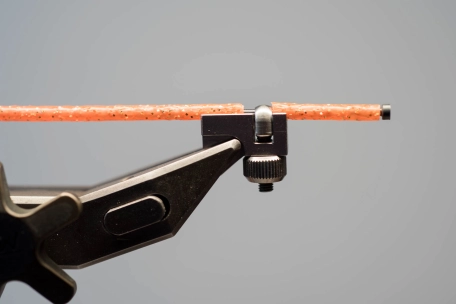
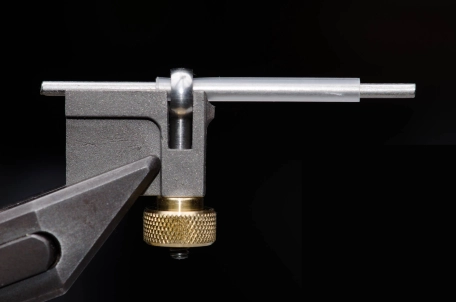
They all work with mandrels - essentially metal rods - that go through the tube, and into a clamp or loop that can catch the mandrel or the mandrel and the tube itself. A small threaded knob enables you to tighten it very well, and once mounted, there's little risk of the tube moving or slipping.
Using two tubes
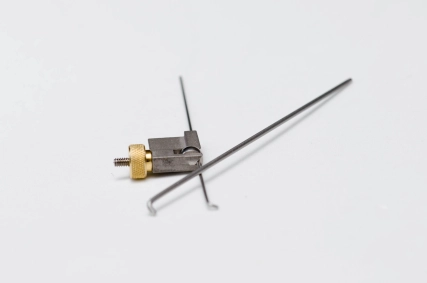
When using this tool, I always use two pieces of tube or two identical bottle tubes: the one I tie on and one mounted in the rear, which has the job of keeping the mandrel and the tube parallel to the tool and the vise.
It doesn't make a huge difference if you just grab one single tube, but using two makes the grip better and also keeps the rotation of the tube in a proper plane - which the ones of us who use rotating vises appreciate.
If you don't need to tie all the way to the rear of the tube, you can also let it pass through the loop on the tool and tighten it. That will work just as well as two bits of tube. On many flies you will add a soft guiding tube for the hook anyway, and need a piece of bare tube in the rear for this purpose. If you are tying on plastic, you can also trim the protruding part shorter once the fly is done.
These tools are all available to buy today (May 2026), and can be found here:
- HMH is widely available from shops and online dealers.
- Futurefly - has a new metal model (HMH copy), but the older plastic one can still be found a few places online.
- Würm is available from their German website.
There are many other copies of the HMH tool, and a search for tube fly adapter online will lead to quite a few different models. Not all will work for metal tubes, though. You want two things from the adapter:
- It needs to have a groove in the top, into which the tube is pulled by the threaded knob.
- You want straight mandrels - preferably in several diameters - and NOT tapered needles.
It's a misunderstanding that the HMH-style tool is a clamp for tapered needles.
It's not.
Needles can be mounted directly in the vise.
The HMH is a clamp for tubes, and is meant for holding the tube itself in a firm grip - not holding a needle. If you have a model with needles, find some suitable, straight metal rods as a substitute, and use the needles directly in the vise. Of course there's no harm done mounting a needle in the HMH-style tool, but it's not necessary and adds an extra "point-of-failure" to your setup.
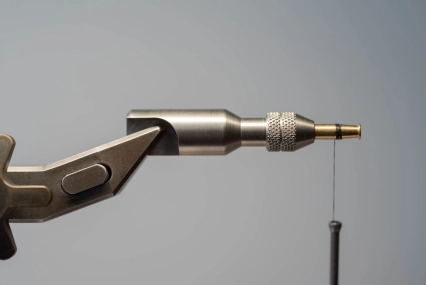
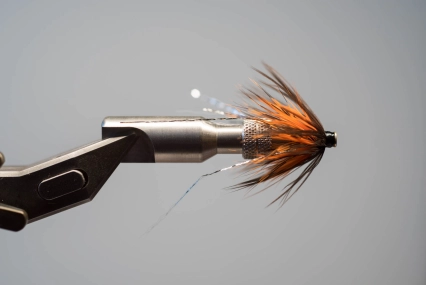
My Russian tool
I bought this some years ago in 2022, and remember it being really inexpensive. I can see from my PayPal-receipt that I paid 31 US$ including postage from Russia.
Unfortunately I can't find the source now, and considering the general conditions in Russia and most of the world's relation to Russia, there might be a good reason for that. (If you should happen to know where the tool can be bought, please let me know - martin@globalflyfisher.com)
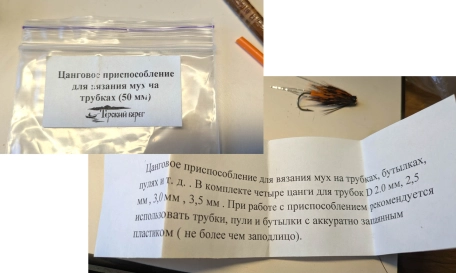
The Russian text on the bag says:
Jig/tool for tying flies on tubes (50 mm)
Tersky Bereg
Tersky Bereg could be the brand name. The Russian language inlay note in the package says:
Clamp device for tying flies on tubes, bottles, bullets, etc.
The set includes four clamps for tubes with diameters of 2.0 mm, 2.5 mm, 3.0 mm, and 3.5 mm.
When working with the device, it is recommended to use tubes, bullets, and bottles with the plastic neatly melted/sealed (not protruding beyond flush level).
The only disadvantage is that the chuck itself is fairly large, and can get in the way of the materials in the rear of the fly. It's not a huge problem, but there is less space here than on the HMH-style tools. On the other hand you have the advantage of being able to insert and secure the lining tube before tying, which can be good when you use a flame to melt the thin inner tube. Doing so before there are any materials on the tube is way easier than doing it on the finished fly.
- Log in to post comments