
Night fishing for Baltic sea trout is in principle possible all year round, but summer is usually considered the prime time
When I fished the most on the Danish coasts, one of my favorite times to fish was at night during the summer and early autumn.
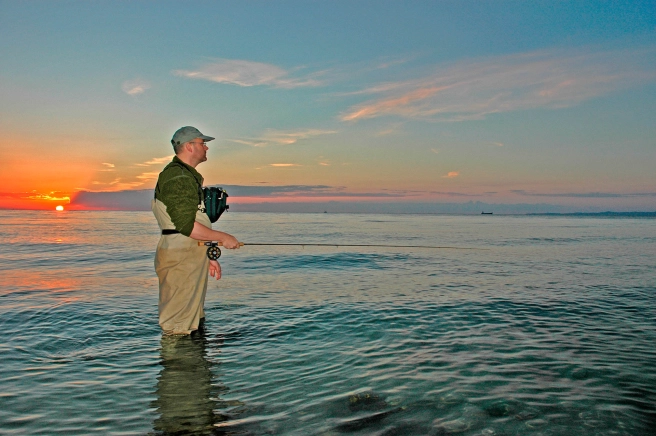
From early on in the summer, late May and June and all the way into September, even October, the coastal sea trout will be active at night. Chasing them in the dark with a fly in the surface can be a really exhilarating experience.
The old school folks used to say that no fish could be caught in the daytime during the summer, but experience has taught us otherwise. The fish are essentially active all around the clock, and many of my fishing friends will go sea trout fishing in the middle of the hottest and sunniest days, fishing in clear, calm, warm water between people swimming.

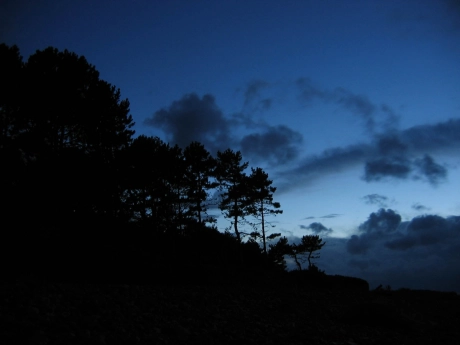

Still, I loved the night fishing, and have spent many a night on a Danish beach watching the sun slowly descend and leave a narrow stripe of light over the horizon most of the night.
I have used a number of flies with great success on these trips, and below you will find a small handful of my most successful ones.
Night fishing tactics
Fishing at night isn't rocket science, even though there can be some challenges. Since it's often dark, it can be difficult to see anything, which can have influence in two ways: wading and casting.
If you aren't too surefooted, I recommend using a wading staff. It doesn't need to be anything fancy, but a foldable DIY thingy like this one can do. It doesn't need to be able to support all your weight, but is mainly used for poking as bit and "feeling" the bottom before you take the next step. On sandy beaches this might not be an issue, but summer fishing at night often takes place on stony reefs, and here an extra limb can be a really great help.
Regarding the casting, I recommend making life easy: use a floating WF line and maybe overline your rod a bit. It makes casting way easier (compared to say a shooting head), and overlining gives you a bit more umph when casting, and will load the rod when casting short. Not being too ambitious when casting can be another key to success in the dark. Short, soft, open casts can save you some trouble and some knots, and the fish can be surprisingly close anyway, so long casts might not be needed.
Light can be good, but use it sparingly, because your eyes get used to the dark, and you will be able to see quite a lot without light. Turning on a bright lamp will most likely reduce that night vision, and leave you night blind when it's turned off again. I personally prefer not to use light at all, or at least use a dimmed lamp with a red filter in front of it.
The surface
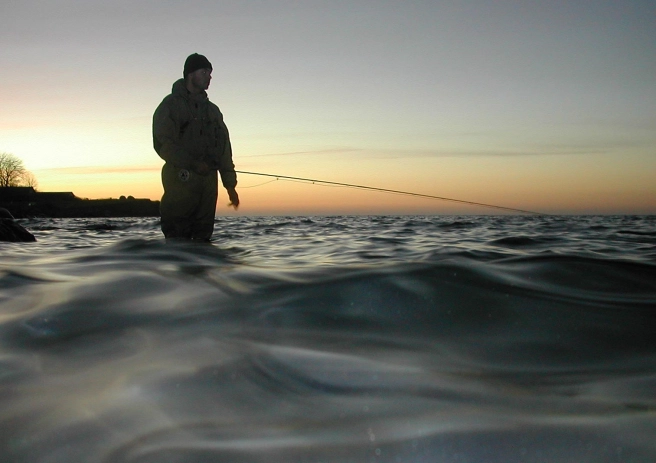
One fun thing about fishing in the dark is that there can be a lot of surface activity because the fish hunt "from below", meaning that they will be low in the water looking up to spot the profiles of food items in the water column or in the surface.
Once on the hunt, they will rise from below and often strike in the surface as you know it from dry fly fishing.
This means that flies that fish high in the water can be effective, and I have always liked fishing muddlers and foam flies.
But don't completely denounce your Woolly Buggers or other traditional sea trout flies, because they can also work.
Bushy and large flies are often preferred by night time anglers, and it may make good sense to use something that pushes some water.
Personally I have always enjoyed stripping in splashing, floating flies that leave a wake in the often smooth surface.
Current
Like with almost any kind of fishing, water movement can be the trigger that makes the fish start feeding. In the Baltic, this often connects with tide, and a tidal current going over a stone reef or shallow tip can make the blood rush in the veins of most Baltic night anglers.
In the summer, wind often calms completely down in the evening and during the night, so there are no waves to move the water, which is sometimes smooth as a mirror.
The tide and current can change that.
Sometimes the current can be as in a river and sweep your line so much that you have to mend it.
The current no doubt creates some commotion, and seems to drag food items from the bottom, the stones and the sea weed, and fish are often found feeding on the backside of a shallow reef where the water deepens a bit, and these items are floating helpless and accessible in the water.


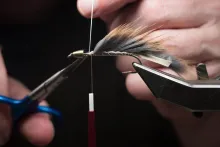
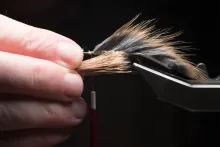
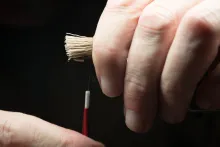
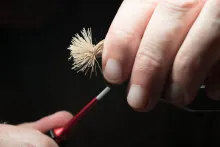
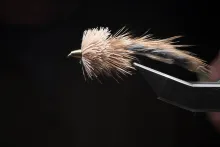
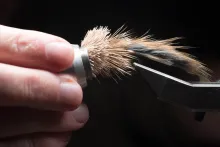
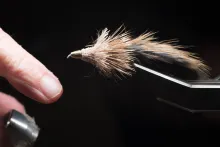
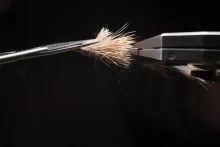
Small Muddler
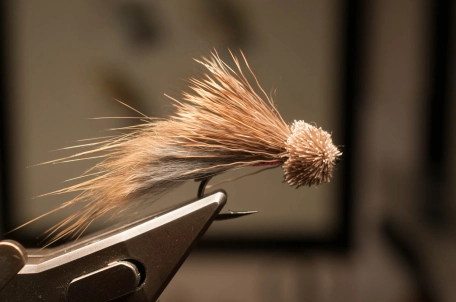
This could essentially be almost any muddler in the 6-4-2 hook size range, but the Small muddler was a generic muddler that I used to tie and fish a lot. It’s simple and efficient – and easy to tie if you know how to spin a muddler head.
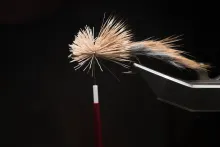
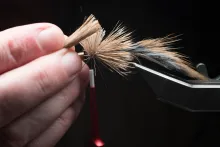
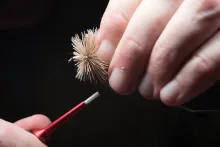
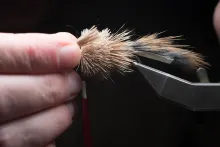
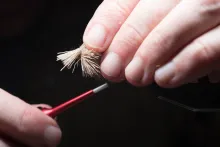
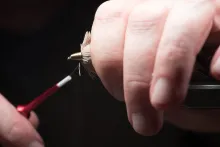
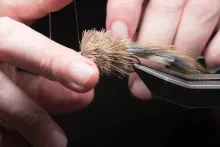
I tie this type of fly in all colors and sizes (within reason), and they usually just consist of a muddler head, a collar – both natural deer hair – and a wing and tail made from soft hair like Arctic fox or maybe marabou or a zonker strip. I sometimes use other deer hair colors and sometimes add some flash or rubber legs to the fly, but mostly it’s just plain deer hair and black Arctic fox.
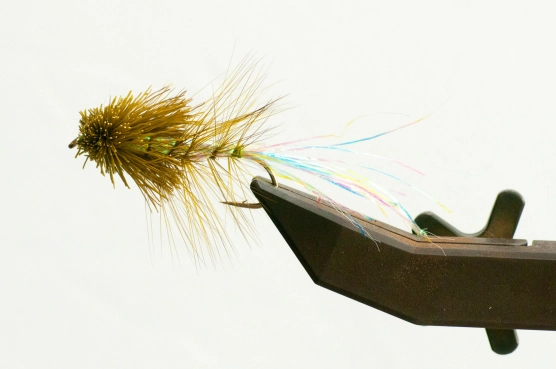
Terrible muddler
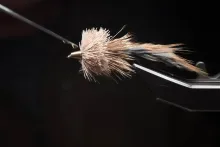
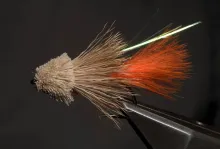
For those who don’t master the deer hair spinning – or don’t want to spend the time spinning and trimming – this messy muddler is a solution. It’s and easy tie, not very critical regarding finish or style. It’s basically deer hair and some flash on a hook and it’s almost better the messier it is tied. It semi-floats and makes a lot of commotion, and that’s the primary task of a surface fishing night fly for sea trout.
Find more about the Terrible Muddler here.
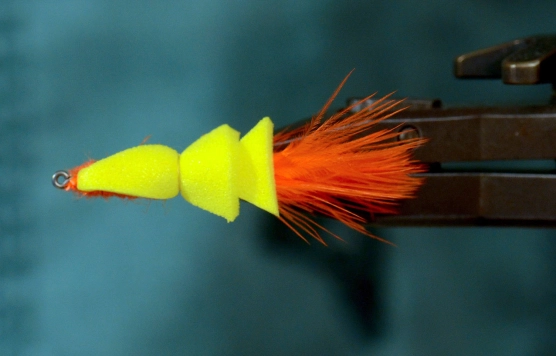
Morrisfoam Diver
This is a lovely fly, which is easy to tie with simple and inexpensive materials. It’s a perfect fly for night fishing, and will – unlike muddlers – float forever and behave as expected whether it’s freshly tied on the leader or has been fishing for hours.
This is how you tie the Morrisfoam Diver.
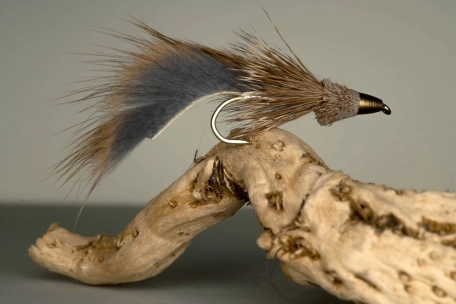
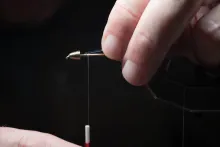
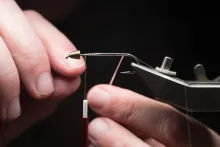
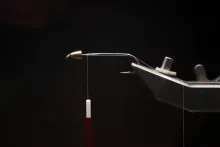
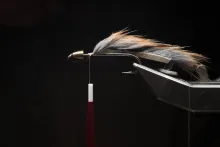
FMJNM
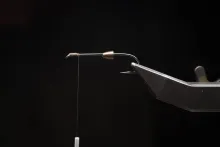
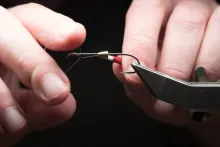
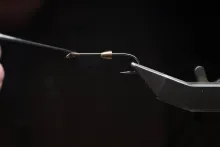
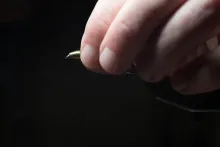
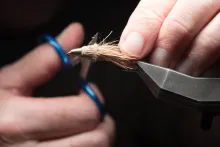
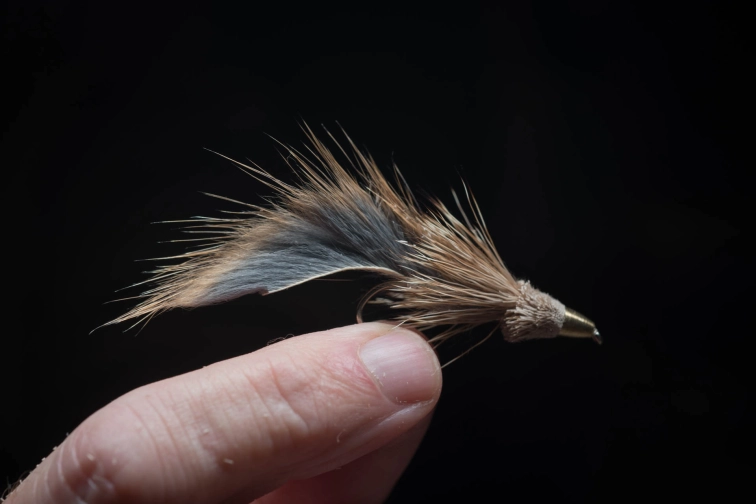
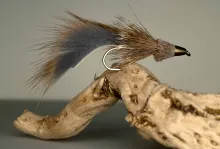
This might not seem as your typical night fly, but sometimes a sinking fly with some volume can be a trigger, especially if a fast tidal current is running. A beaded and bushy Woolly Bugger can do the trick, but I really like this cone head fly that I tied first many, many years ago, and still love tying.
It’s a beast to fish and requires some calm and convincing casting. Nothing fast or crazy here. The weight of the fly will slow things down naturally, and you also want to keep things under control, because anything with heavy metal in the front – like this or any bead or conehead fly – can wreak havoc to a rod tip if you aren’t careful.
I prefer using a classic WF line for these flies, rather than the shooting heads often used on the Danish coasts. When fishing at night, line control is more important than distance. Also, the WF line carries the heavy fly better than a shooting head. Fishing this on my preferred 5-weight rod is also stretching it. A 6-weight or even a 7-weight is a better choice.
This fly fishes very well in hard current, and will definitely also be an excellen fly for large, predatory stream trout. Big streamers have long been a choice for many anglers targeting trophy trout in streams.

|
|
|
|
|
|
|
|
|
|
|
|
|
|
|
|
|
|
|
|
|
|
|
|
|
|
|
|
|
|
|
|
|
|
|
|
|
|
|
|
|
|
|
Martin Joergensen
- Log in to post comments




Night Fishing for Seatrout
Yes, indeed, fly fishing for seatrout, or as we have here on Vancouver Island sea-run Cutthroat trout, after dark can be exhilarating to say the least. I incorporate glow-in-the-dark beads along the top side of the body Ridj-Bak style. Webby chicken hackle palmered overall with a tail of glow-in-the-dark Flashabou. It moves water well and presents a bulky profile and the glowing beads help track the path of the fly. Some fun, for sure. Cheers!