These worm patterns tied with bead tubing are very tough and made to last – and very easy to tie
When a river is in flood, the water is coloured, and all sorts of fish food are being washed from the riverbed and out of the banks, fishing some form of worm imitation can be an effective tactic.
Squirmies
Back in the day a red chenille San Juan Worm might be a fly angler’s choice for such conditions, nowadays it is the ubiquitous Squirmy Wormy that might be somewhat guiltily tied onto a leader when all else fails. There are times and places where it’s banned, including competitions under FIPS-Mouche rules and some fly-only waters, it being regarded as a plastic lure rather that a fly, presumably on the basis that most of the material is not wrapped onto the hook.
There’s no doubt that Squirmies catch a lot of fish, but I do not like them and don’t use them. It’s nothing to do with ethics or whether they are a fly or not. I did tie and fish them when the material became available, and they caught trout and grayling. I even tied a floating variant with a bunch of the material lashed onto a strong hook for carp on lakes.
Longevity
My issue is the longevity of the material. In common with many anglers, I used to carry a couple of Squirmies in the corner of a fly box for emergency use only. The problem was that when I actually came to need one of them, they had either already self-destructed in the box or would fall apart after a couple of casts. This well-known problem has led to the design of variants with flexi-floss loops that allow a broken or rotted fly to be rejuvenated with a fresh piece of material. That strikes me as more of a bug than a feature.
Very tough
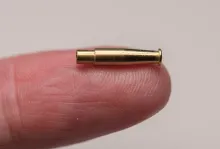
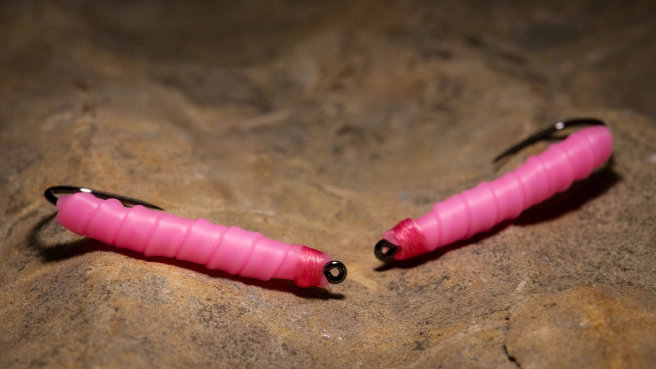
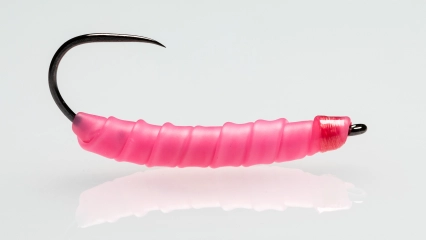
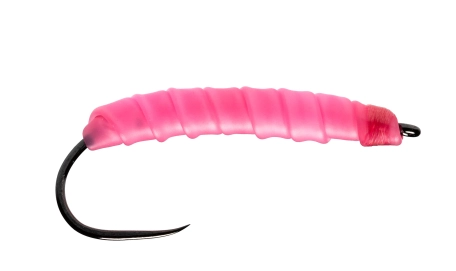
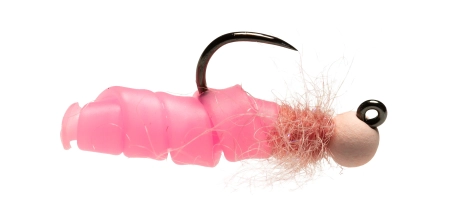
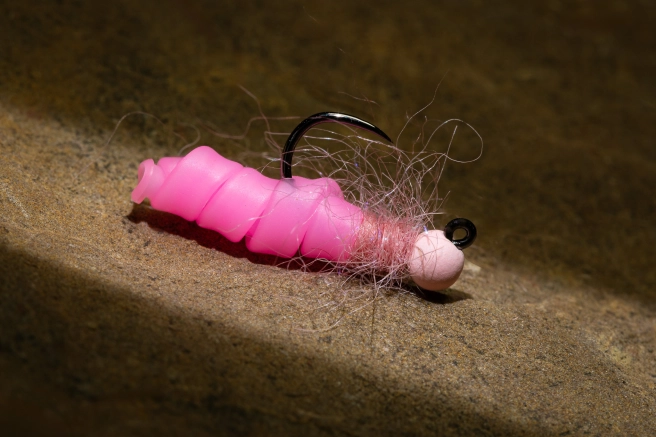
The Tube Worm is tied with the pink version of the bead tubing I’ve used for tying caddis pupae and larvae. Unlike the stuff used for Squirmies, bead tubing is very tough and made to last, people tend to get a bit annoyed if their bracelet or necklace beaks or self-destructs scattering beads everywhere. Wrapping bead tube along a hook in butted turns produces body segments that are very reminiscent of the real thing.
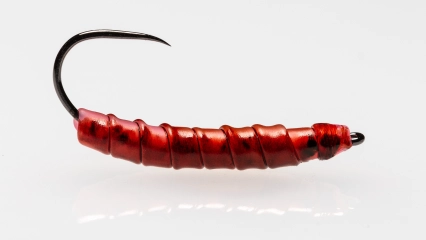
If you are not too keen on a bright pink worm, then a bit of shading with one or two marker pens will tone down the colour of the worm or turn it into an imitation of another form of fish food that gets washed downstream in floods, like a leatherjacket cranefly larva.
Detached bodies
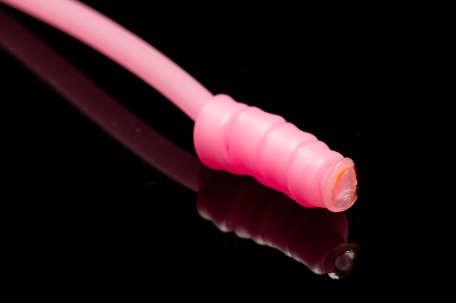
If you get some bead tube to tie up some pupae or worms by wrapping it around a hook you can also use the same material to make detached bodies for flies tied on smaller hooks. It’s simple to do.
First make a five turn overhand knot, then lubricate the coils with soap and water before pulling tight while easing the coils into a neat knot. Trim one end close to the knot and gently heat near a lighter flame to form a ring on the end.
- Log in to post comments