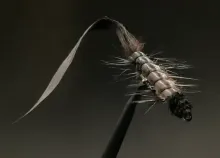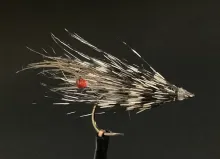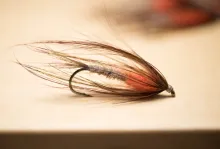
Again a 'classic' Danish fly. Actually only uses one significant material: a piece of mylar tubing. Body can be covered with yarn or floss to add color. A really good fly for cold or unclear water. Fish deep and slow in the winter.
Notice that this pattern description has been updated. The new version can be found here.
 Again a 'classic' Danish fly. Actually only uses one significant material: a piece of mylar tubing. Body can be covered with yarn or floss to add color. A really good fly for cold or unclear water. Fish deep and slow in the winter.
| Hook | 2-10, down eye streamer hook. |
| Thread | Red |
| Tail | Split back end of mylar tube |
| Body | Mylar tube over red yarn or dubbing |
| Hackle | Front end of mylar tube, split |
| Head | Tying thread |
- Cover middle part of shank with lead wire (optional).
- Cover shank and lead with red wool yarn ending up with thread at hook bend.
- Remove cotton kernel from a piece of clear mylar tubing 2.5 times shank length and thread over shank.
- Let the back third split and pass thread between the straws.
- Tie the tube in, whip finish and varnish.
- Tie tubing in just behind hook eye and let tubing become split in front too.
- Draw loose straws backwards to form a 'hackle'.
- Tie down and finish off fly.
The red yarn or dubbing is just to give some color. Change it if you want to, or use colored flash tubing.
- Log in to post comments