Damselflies and dragonflies are common, come in a variety of sizes and colours and often end their lives as fish food
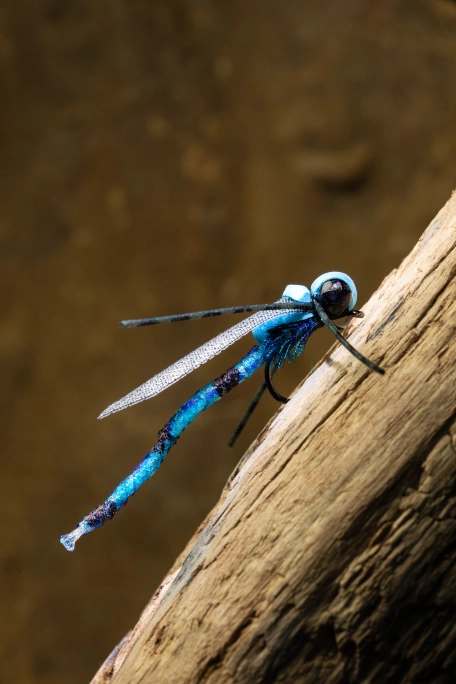
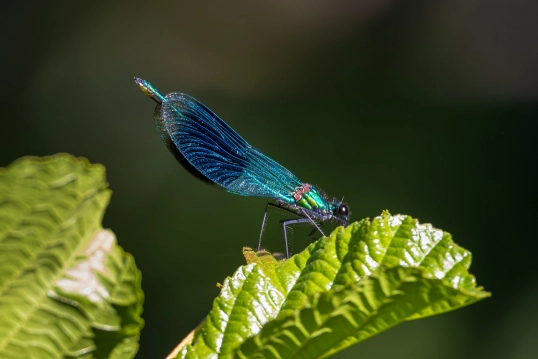
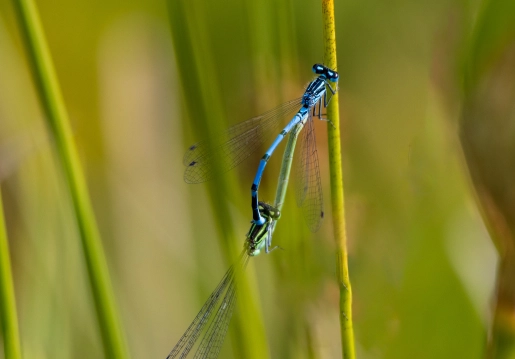
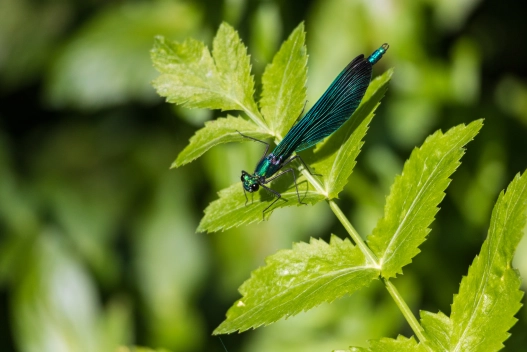
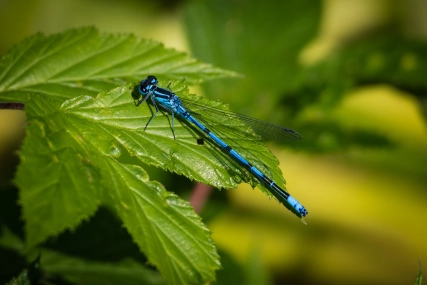
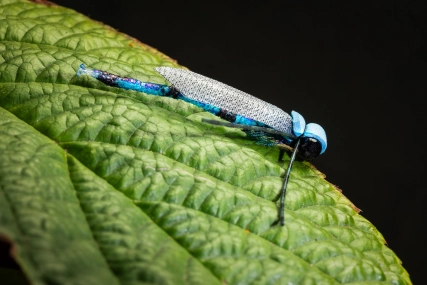
Damselflies and dragonflies are common on the waters that I fish. They come in a variety of sizes and colours and often end their lives as fish food. Both can be blue, green, red or brown with a superficially similar appearance and many people call them all dragonflies. There is one key feature that distinguishes between them; damsels can fold their wings, dragons cannot.
Dragonflies are fascinating creatures. They are one of the most successful predators on earth with a kill rate of around 95%, which compares to around 50% for cheetahs and a comparatively dismal 25% for lions. Dragonflies achieve this by having high resolution 360 degree vision coupled with the ability to track and intercept prey rather than chasing it. This is enabled by the arrangement of their four wings which operate independently allowing them to hover, fly forwards and backwards and change direction almost instantly.
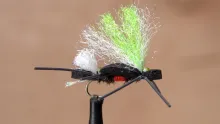
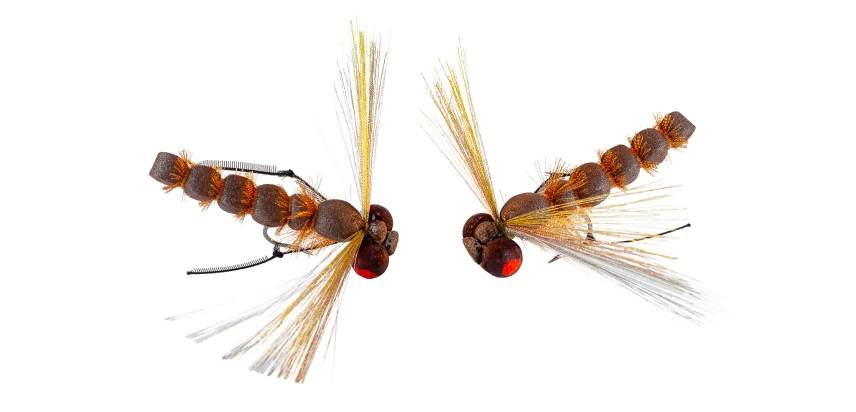
Dragonflies pose a problem to a fly tyer going for an accurate imitation; big wings sticking out a right angles from the body effectively create a propeller when you try and cast one. I have tied foam versions in the past for stalking carp at close range where the fly could be simply flicked or lowered onto the water in the path of a cruising fish.
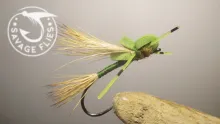
Damselflies are more suitable subjects for imitation; tied with their wings swept back they are far more amenable to be cast with a fly rod and once you’ve got the materials, they can be tied in multiple different colours simply by switching marker pens.
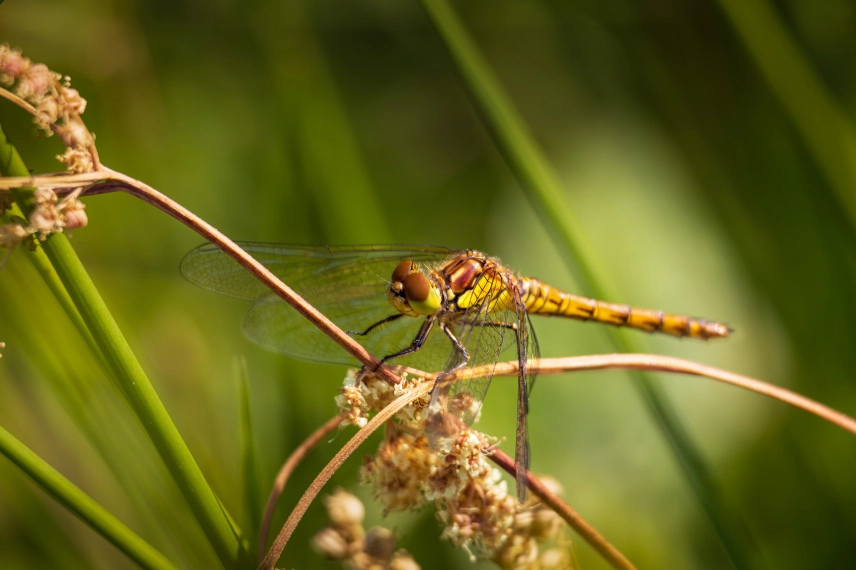
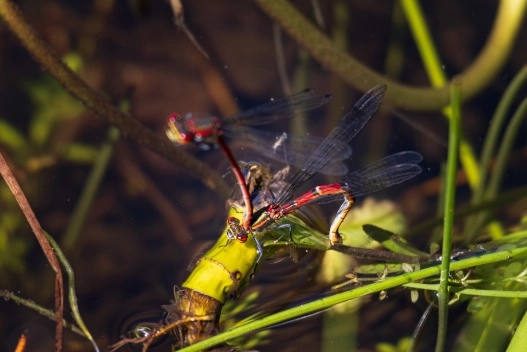
In the proximity of fish, they are vulnerable at several life stages while hatching, mating or laying their eggs, all of which bring them near or onto the water. The adults hunt small insects in flight and an errant gust of wind, or a mistimed turn can result in them crashing into the water. They are not good swimmers and are generally doomed from that point on. Even flying close to the surface is risky and it’s not unknown for trout to jump to catch them.
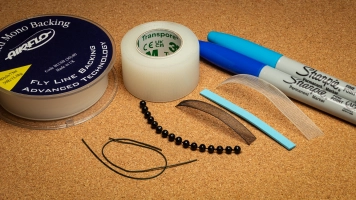
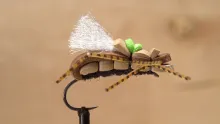
Transpore is waterproof and inherently buoyant, which coupled with the wing which is a sandwich of organza ribbon between two layers of tape, plus the craft foam in the thorax, makes for a fly that floats nicely on the water just waiting to be eaten.
A stout hook gives the damsel a keel and prevents it landing on its side.
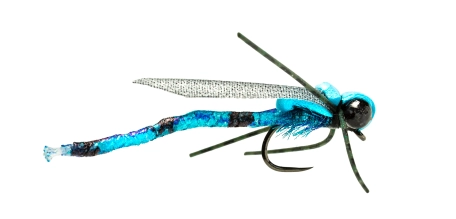
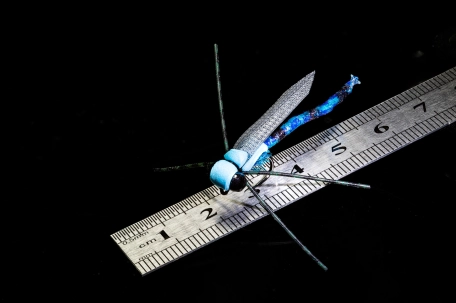
To form the body thread a piece of hollow braid onto a sewing needle and clamp the eye in your tying vice. Stick a length of Transpore tape to a cutting mat or chopping board and use a ruler and craft knife to cut a 2-3mm strip from the edge. Stick one end to the braid near the needle point and wrap along the braid and back in overlapping turns. Roll the body between your fingers and then colour it with marker pens in your chosen colour scheme. Slide the body off the needle, trim the frayed end of the braid close to the body and melt near a flame.
To make the wing sandwich a length of 6mm black organza ribbon between two pieces of Transpore and then cut along the insides of the woven ribbon edges. Cut the sandwich to length and taper one end.
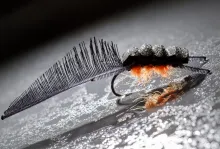
I like to tie the legs a bit longer than on the naturals so that they hang down and wriggle in the water as the fly sits on the surface. On lakes and reservoirs, I fish it with a fly rod, casting out and then giving it the odd twitch during a slow retrieve to cover the water and attract the attention of cruising trout. On rivers it come into its own fished with a long tenkara rod which gives me direct contact allowing me to twitch, lift and otherwise manipulate the fly to imitate an unfortunate doomed damsel.
Nick Thomas
- Log in to post comments