
Wherever you are targeting bonefish, one thing stays the same: choosing the right fly can be a key to success
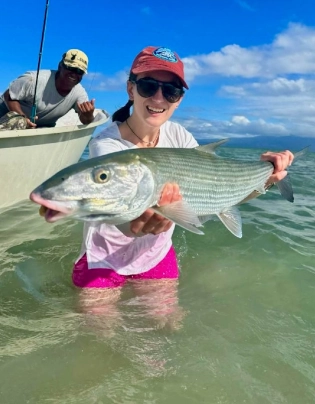
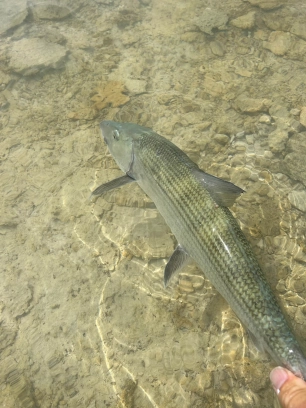
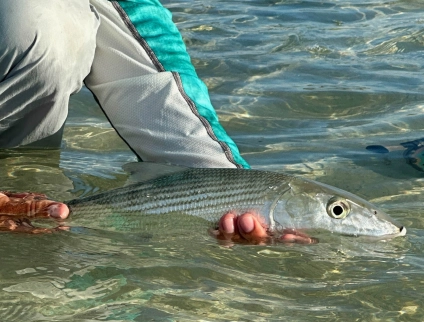
Bonefish are known as the grey ghosts of the flats because of their speed, alertness, and the rewarding challenge they present to fly anglers. Whether you’re stalking tailing fish on the pale sands of the Bahamas, chasing cruisers through turtle grass in Mexico, or targeting big singles in the Florida Keys, one thing stays the same: choosing the right fly is key to success.
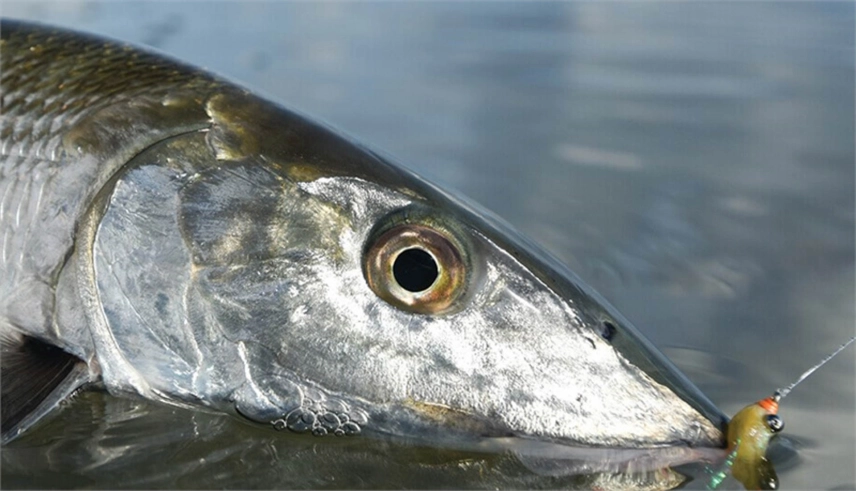
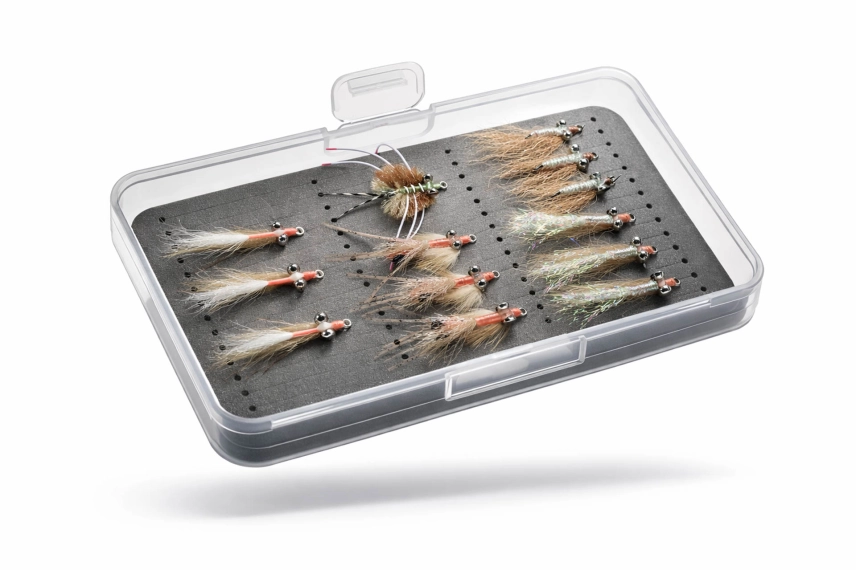
Many new anglers often stand in front of the fly bins at their local shop or browse websites with attractive bonefish flies. They scratch their heads and wonder, “So many choices – where do I start?” As a fly shop owner, I am frequently asked which flies are needed for a week of fishing – and how many. The good news is that an angler doesn’t need to buy dozens of bonefish flies. The six flies below are perfect because they consistently match bonefish food sources.
Ed Hudon
Understanding What Bonefish Eat
Bonefish are opportunistic bottom feeders, feeding on shrimp, crabs, worms, and small creatures that dwell on the bottom. Effective bonefish flies don't have to match a specific species exactly. Instead, they need to be the right size, shape, sink rate, and behavior to trigger a feeding response. Drawing on decades of collective personal and guiding experience from across the Caribbean and Mexico, the following six flies are regarded as essential. Each is flats-tested, guide-approved, and effective in a wide range of conditions. All of these fly patterns are designed with a hook-up orientation to prevent snagging on the bottom.
The Six Essential Bonefish Flies
1. McVay’s Gotcha (Sizes #4–6)
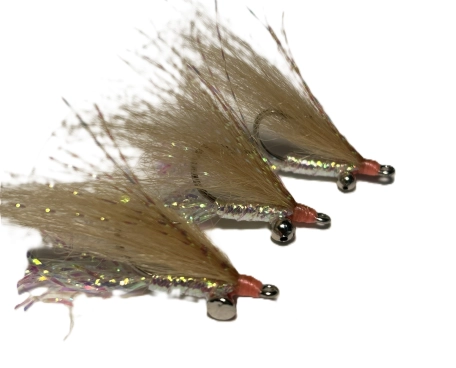
Originating from Andros Island, the Gotcha is one of the most successful bonefish patterns ever created. Its profile resembles a shrimp, thanks to its sparse, translucent wing, shrimp-like shape, and bright pink hotspot 'nose.' This fly performs well from shallow tailing waters to mid-depth flats. For bonefish feeding on shrimp, this fly perfectly matches the shape of a shrimp, making it an excellent choice for exploring unfamiliar flats. If you could take only one pattern on a bonefish trip, the Gotcha would be it.
2. Crazy Charlie (Sizes #4–6)
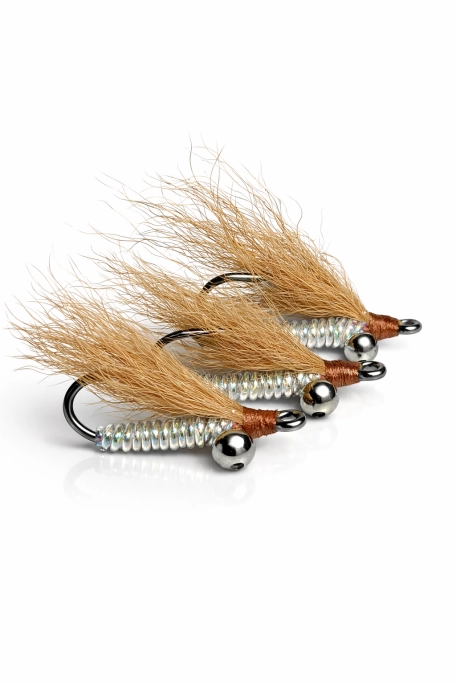
The Crazy Charlie bonefish fly is widely regarded as a foundational pattern that shaped modern bonefish fly design and flats fly fishing as we know it today. Created in the 1970s, it is believed to be the first fly to incorporate bead chain eyes and a point-up orientation to prevent snags (Kreh, 2001; Nauheim, 1973). Many popular bonefish flies, including the Gotcha and other shrimp patterns, were developed using the Crazy Charlie as a base.
The Crazy Charlie works well because it mimics the movements of shrimp and other small crustaceans that bonefish eat. The subtle flash and slim shape also imitate tiny glass minnows, making the fly adaptable to many conditions.
3. Gotcha-Clouser (Sizes #4–6)
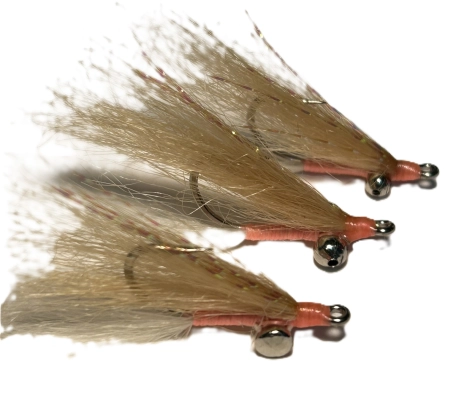
This modern hybrid pattern combines the classic appearance of the Gotcha with the versatility of a bonefish-Clouser fly. Guides and tiers began blending these designs to craft a fly that maintained the shrimp profile of the Gotcha but offered the improved sink rate and jigging action of the Clouser.
When bonefish are actively feeding or cruising in slightly deeper water, this fly with small lead eyes can make a significant difference.
4. Merkin Crab (Sizes #4–6)
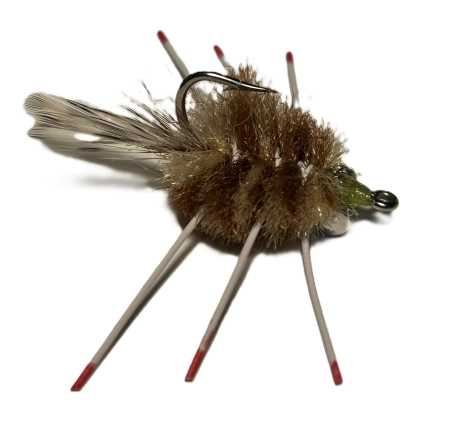
The Merkin Crab fly is a classic saltwater pattern created by Del Brown, one of the most successful permit anglers in fly fishing history. Brown designed the Merkin specifically to imitate crabs when permit fishing.
The Merkin Crab has also become highly effective for bonefish. Bonefish feed on crustaceans like small crabs and shrimp in tropical flats, and the Merkin’s realistic profile and bottom-oriented presentation make it especially successful when bonefish are targeting crabs (Bonefish & Tarpon Trust, n.d.; Colton et al., 1987; Rosenbauer, 2006).
According to Fly Fisherman Magazine, the Merkin is widely recognized as one of the most influential crab fly patterns ever created. Its design has inspired numerous variations and remains a key pattern in modern flats fly fishing. It continues to be used worldwide in fisheries such as the Bahamas, Belize, Florida Keys, and other tropical flats environments where crab-feeding fish are found.
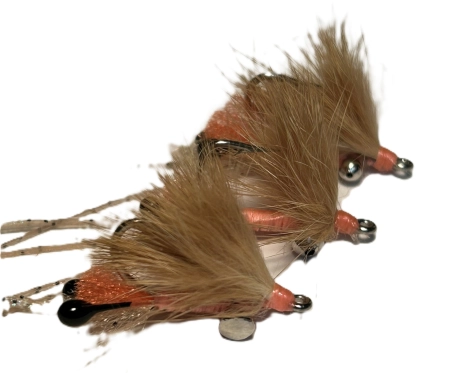
5. Peterson’s Spawning Shrimp (Sizes #4–6)
The Peterson’s Spawning Shrimp is one of the most effective and trusted bonefish flies ever made. Designed to imitate an egg-laying shrimp, it provides bonefish with a highly tempting and nutritious food source. Its unique egg-sac trigger and realistic profile make it a go-to pattern at bonefish destinations worldwide.
The Peterson’s Spawning Shrimp features a rabbit fur wing that creates a natural motion when it rests on the bottom. The fly pulses with current action, offering an irresistible trigger for bonefish. The pattern has quickly become a guide favorite and remains one of the most trusted flies in Bahamian bonefish fisheries.
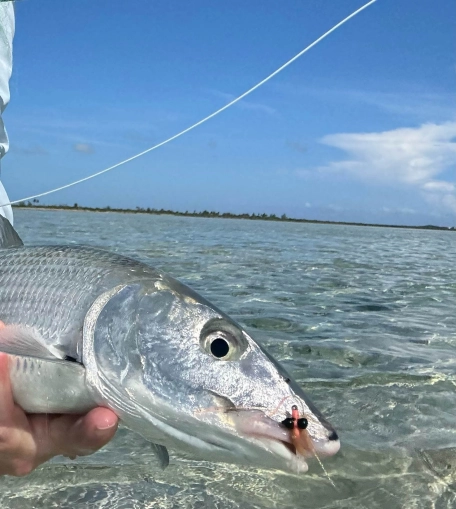
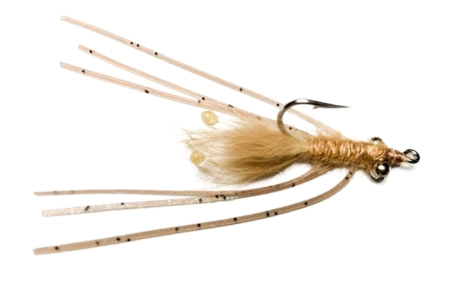
6. BV Mantis Shrimp (Sizes #2–6)
Bonefish are especially attracted to mantis shrimp, and this fly, with rubber legs, provides lots of movement and a quick sink rate because of its slim body profile. This is a good fly to use when the sun is high, and a flashy bonefish fly might spook some bonefish.
The BV Mantis Shrimp fly is often tied in tan and olive to match the bottom color of the flat. Many other color options are available – white or cream are also popular.
Choosing the Right Bonefish Fly on the Flats
1. Match Your Fly to the Bottom
Bonefish rely on subtle contrasts and movement to find their prey. Therefore, it’s important to select a fly that will best match the bottom of the bonefish flat. When fishing on a light sandy bottom, tan, cream, and white flies are the best choice. If the flat is covered in turtle grass or has a mottled appearance, then light olive (turtle grass) or brown (mottled bottom) is a smart choice.
2. Adjust Weight to Water Depth
A stealthy approach, quiet fly entry, and proper sink rate are crucial for increasing strikes. A good rule of thumb is that a bonefish fly should sink to the bottom of the flat within 2-3 seconds. This gives the bonefish a chance to see the fly and approach.
3. Let the Fish Find the Fly on the Bottom
Most bonefish eat the fly as soon as it settles—look for the telltale drop or puff of sand as an indicator. Short, slow strips of the fly line will make the fly “jump,” then settle back to the bottom. This movement creates small puffs of sand when it hits the bottom, helping the bonefish identify its prey.
A Bonefish Box Built for Every Flat
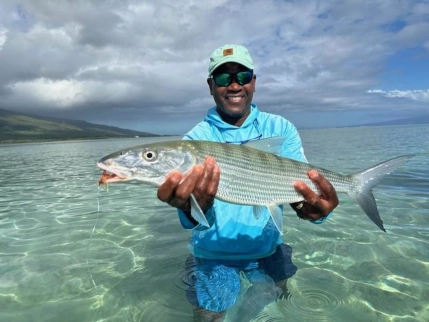
No matter where you’re headed—whether it’s the Bahamas, Mexico, or Florida—these six flies will handle nearly any situation you face. With different patterns of shrimp, crab, and hybrids in various sizes, weights, and colors, you’ll be ready for the most common fishing scenarios. These are the flies trusted by guides and irresistible to bonefish.
Author Bio
Ed Hudon is a commercial fly tier and founder of Merrimack River Flies, specializing in premium saltwater patterns. With extensive experience pursuing bonefish on Caribbean flats, he writes to help anglers improve their fly selection and presentation through practical, experience-based insights grounded in traditional craftsmanship and modern fly design.

- Log in to post comments
