
Don’t let the title trick you. This book is about much more than studying insects.
Updated or edited 5 months ago
I didn’t know that I wanted to learn more about Alfred Ronalds, but this book stirred my interest and thankfully delivered in full.
Ronalds was an Englishman born in the beginning of the 1800’s who later moved to Australia and lived what seems to have been an adventurous life, prospecting for gold and working as an engraver, lithographer and printer.
He fished as a kid, and before leaving England he had researched for his book “The Fly-fisher’s Entomology" along his home rivers, and it was published in 1836.
According to Ronalds’ Wikipedia-entry (yes, he has one, and so does the original book) it was quite successful, and was published in several subsequent editions with the 12th one coming out as late as in 1921. The book has been reprinted several times since, the latest in 2009 it seems.
You can actually find the full original 1836 edition on Archive.org, and in that particular edition you will also find “nineteen copper plates" illustrating various aspects of Ronalds’ findings as well as insects and flies.
The book is available online in several of the following editions, like 1839, 1856 and several more.
Now, more than 100 years after the latest edition, it’s available in an absolutely new edition, reprinted and commented and illustrated by Paul Troël.
This edition is – not surprisingly – published by Welsh publisher Coch-y-Bonddu Books in the series Angling Monographies, which consists of books covering various fly-fishing related historic subjects – like “The Lost Salmon Flies of Balmoral", “The Salmon Flies of James Harper", and “Ernest Crosfield", which I reviewed in 2022.
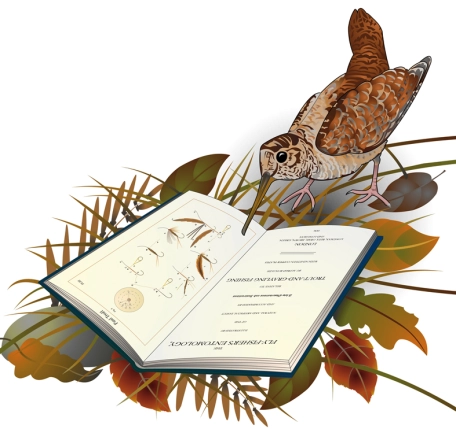
Monographs are typically in-depth works focused on a single subject, and I’m not quite sure whether this particular book lives up to that label, even though it does of course focus solely on Ronalds’ book, which again focuses on a number of subjects. Not that I care much, because it’s a wonderful book – monograph or not!
it’s a wonderful book – monograph or not!
It’s not just a reprint of the original book. It’s not even an updated and edited version. No, it’s actually a whole new book about the book, which also contains the full text of the original. And I write “text" on purpose, because even though the book also contains all the illustrations from the original, the far majority of these have been redone by Paul Troël and are supplemented by many more.
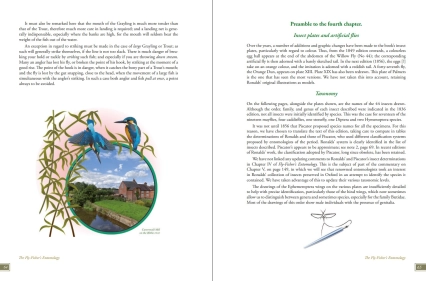
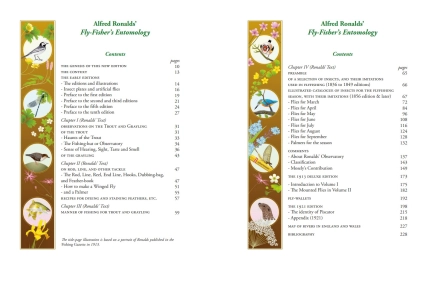
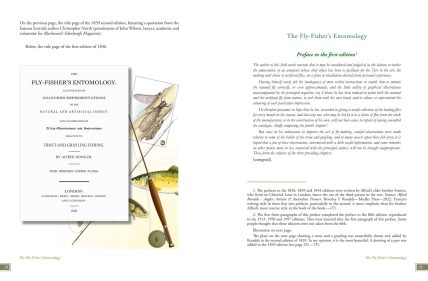
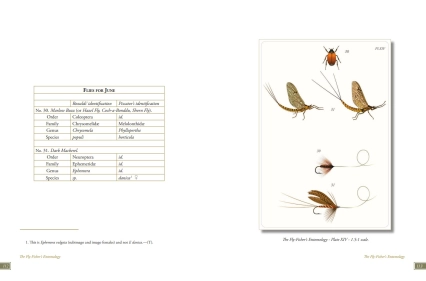
My dive into the old copies showed me a couple of things about this new version.
First of all the original was fairly small and short compared to the present one. It was a 166 page book in a compact format, while the present one is 240 pages in a generous 190 x 250mm (7.5 × 9.8 in) format.
Secondly there are way more illustrations in this edition ... like way, way more. The original 19, later 20 plates, are still there (more on that below), but there are literally hundreds of other illustrations added to them.
And what illustrations! Let me for once start there rather than with the text or structure in the book, because no matter what a reader might think of that, the illustrations are so numerous, so beautiful and such an important part of the book that they deserve special attention.
Paul Troël has drawn them all – except for some reprints of the original plates – which Paul has also redrawn, in other words updated and sharpened in his style.
Now, Ronalds himself was no slouch when it came to make illustrations. He was after all an engraver, lithographer and printer, so illustrations was literally his trade. But the original illustrations are of course a product of their time, and technology back then could produce beautiful illustrations, but reproducing them was difficult and even with good reproduction and printing, they cannot live up to the quality of modern printed products.
When I inquired about some samples to use for this review, Paul wrote back:
If you'd like more or have any questions, please feel free to contact me.
I should mention that I'm entirely self-taught and came to drawing by illustrating the mayflies of France and elsewhere, a total of 150 plates. We also published a book that had a small success in France.
I started drawing in the 1990s, and my work has nothing to do with AI …
Not that I suspected that AI was involved. As you can see from the illustrations that I have included here, they are beautiful.
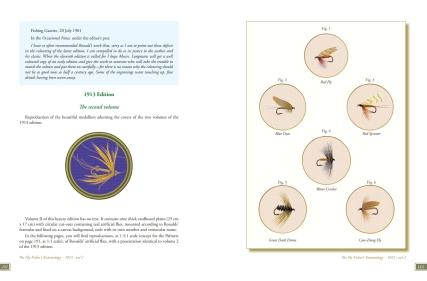
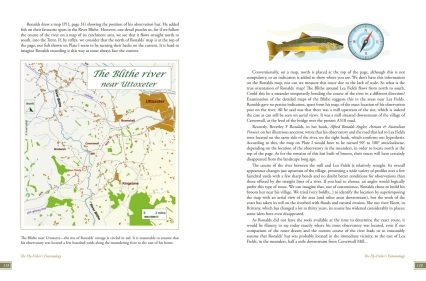
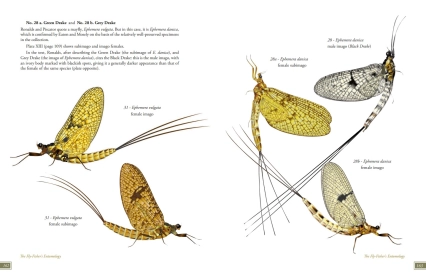
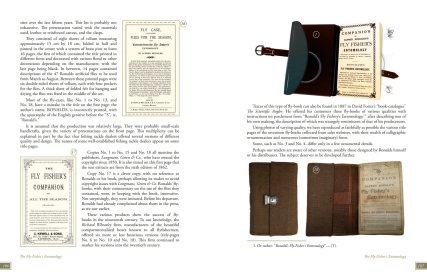
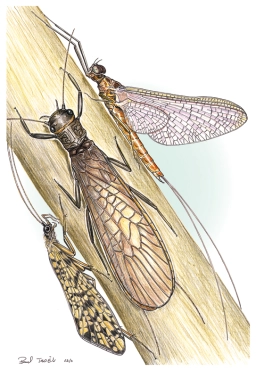
The illustrations are what drew me into this book at first.
But with them comes the text. And there’s a lot of it! This book has so much more content than the original. The size and page count alone leaves room for much more content.
It contains the full text of the original. These chapters seem to have been quite faithfully reproduced with the exception of Troël’s updated illustrations, which are much cleaner and more clear than the originals. Many of the originals can also be found, reproduced in smaller sizes, and the new versions are definitely an improvement, even though – as Troël also notes: it was a remarkable achievement getting the originals so detailed and precise, considering the methods available in the time they were made.
Troël also has a long chapter on the insects covered in the original, each beautifully illustrated and with comments on Ronalds’ mention of them. The entomology and classification has changed since the original was written, and Troël adds comments clearing various misplacements and mix-ups.
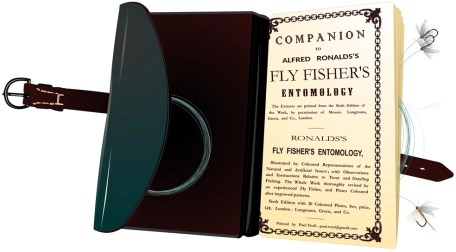
So, here we have a book about a book. It covers about everything worth covering on Ronalds’ work including comments on the many editions, maps and the area where he conducted his research (his “observatory" as it’s referenced), the way Ronalds marketed the book and also made a business from selling companion flies and even rods.
I always enjoy these glimpses into an era of printed magazines and ads where a split cane rod with screw joints was offered for 1 £ and 10 shillings.
I did not know of Ronalds’ work before reading this, and I do not have a tight personal relation to entomology in combination with fly-fishing other than what I picked up through my biology studies many years ago and the occasional exposure to stream fishing that I have had during my many years as a fly angler. My knowledge of fishing related entomology mainly comes from “armchair fishing" reading books and watching videos.
Still, I thoroughly enjoyed this book. As I said: a glimpse into a time where fly angling was a “gentleman’s sport" and being somewhat a naturalist was a part of exercising that sport.
Paul Troël has done a wonderful job of conveying what Ronalds did: his research, his writing, his illustrations – and then some.
If you have any interest in the history of fly fishing, this is a book you will appreciate. And if you’re a stream fisherman you will get a ton of information on insects and their imitations as a bonus, thanks to the work of both Ronalds and Troël.
- Log in to post comments
