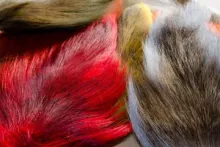
Hair from hare’s ears and hare’s mask is well known and widely used in fishing flies. Less familiar are flies tied with hair from hares' paws.
Hair from hare’s ears and hare’s mask is well known and widely used in fishing flies. Less familiar are flies tied with hair from hare’s paws, but they are rightly on their way to blending into the established hierarchy.
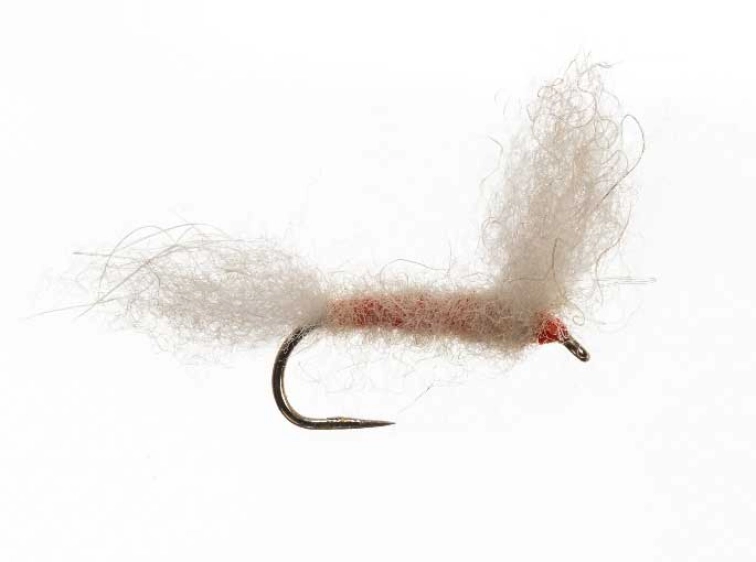
As for these flies, take your pick as to which meaning fits best.
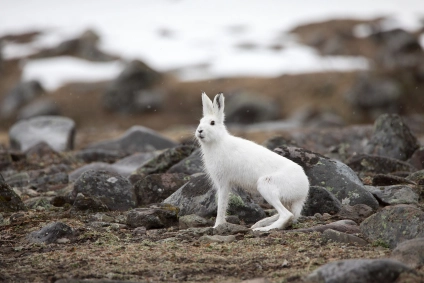
It began in North America, where fly fishers started using hair from the paws of the hare called the snowshoe rabbit or snowshoe hare. The name comes from its oversized hind feet, which allow the hare to move across snowy terrain. These large feet act as the snowshoes that many of us use as an alternative to skis in winter.
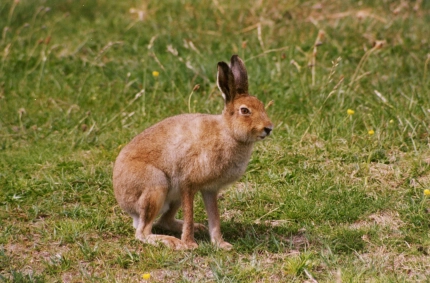
The snowshoe hare lives well protected and relatively comfortably in dense vegetation. In Norway, the skogshare (wood hare, more commonly known as mountain hare in English)—normally just called hare—is widespread across most of the country. It is significantly larger than its American cousin, adapted to open terrain and built for speed! Its hind feet are like spring-loaded catapults and, from what I have seen, larger than those of its American relative. In my opinion, that makes them more suitable for fly tying than the North American variety.
The lotus effect
Several properties make hair from hare’s paws excellent for many fishing flies. The paws can resemble thick slippers with woolen soles, built to withstand heavy wear. On a single paw there are several different types and lengths of hair. They are hydrophobic (water‑repellent); the hairs have a waxy surface texture that causes water droplets to bead and roll off. This is similar to the lotus effect, named after the leaves of the lotus plant where droplets form pearls on the surface. The crinkly hair traps air bubbles, making the hairs particularly suitable for flies intended to fish in the surface film.
Seal fur substitute
In addition, the hairs are slightly translucent, with nearly flat to oval cross‑sections that refract light directionally. In other words, hair from hare’s paws shares many of the properties of seal fur, which was once widely used in fishing flies, especially salmon flies. Access to seal fur is now heavily restricted and therefore difficult to obtain. Hare's paw hair (snowshoe rabbit) can be a good substitute.
Within a single hare’s paw you will find hairs with very different properties. To make the most useful hairs more accessible, the paw should be split with a knife between the middle claws and inward. This is easiest before the paw has dried.
Paws from Norwegian hares normally do not need washing and have excellent floating properties even without impregnation.
The Usual
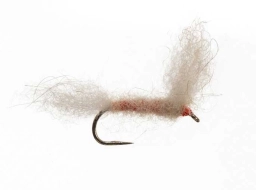
Fran Betters was, if not the very first, then at least one of the first to use hair from snowshoe hare paws. He created his famous The Usual in the early 1980s.
More patterns
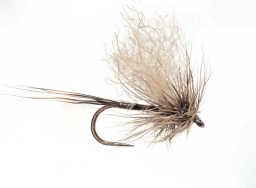
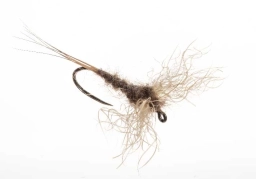
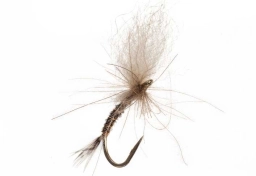
Here's a few other patterns that can be tied with snowshoe rabbit hair.
- Log in to post comments