
Kern's Perfect Leo Shrimp
Published: 2010-07-08
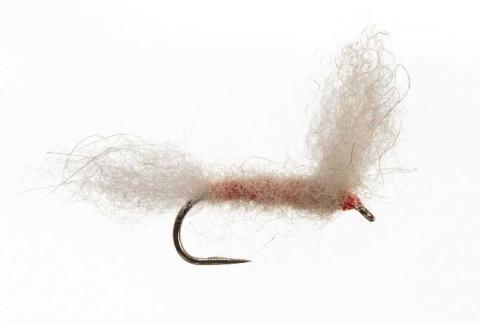
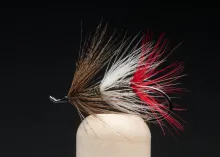
This past month | A realistic, perfect swimming shrimp imitation for both hot and cold water and a big variety of species.
The fly has many neat details and is a great upgrade from those quickly tied flies. It makes your fly box look great and keeps you away from the TV.
|
|
Colored Mono Eyes
Published: 2010-07-01
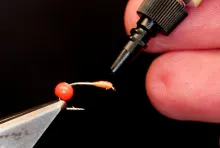
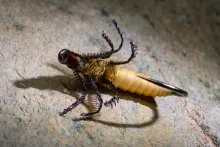
This past month | Five pairs of mono eyes dipped in epoxy for just around 5,50€ or 7$. It sounds like a good business opportunity, but as a consumer it just pushes you to make your eyes your self.
On a trip to Fyn this spring two Danes and an American-wanna-be-German made their own.
|
|
Dubbing Techniques
Published: 2010-04-16
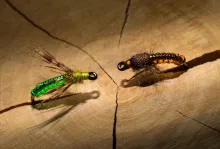
4 months ago | Without a doubt, dubbing tools and techniques are one of the things most likely to confuse fly tyers. With an explosion of new tools, comes an obvious question, how do you use all this stuff and why should I buy yet one more tool?
|
|
Classics
Published: 2009-03-01
A couple of years ago | Tying flies not meant for fishing sounds odd to some but dragging others into the world of advanced techniques. Anders Ovesen takes us into his cave of threads and feathers and reveals some puzzles needed to tie da old school style. Hang on to this detailed description and fly to the
|
|
Whipfinish video
Published: 2009-01-29
A couple of years ago | This short video shows you how to whip finish with your fingers rather than using a tool. It's quite easy, looks cool and saves you trying to localize that whipfinisher on your messy tying table - that is if you are like the rest of us...
|
|
G-String Eyes
Published: 2009-01-11
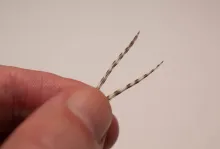
A couple of years ago | If you play guitar and tie flies...you are wasting some valuable tying material every time you change your strings. Old guitar strings have something to make flies land softly on the water and jig just enough to tease fish into striking. Learn from GFF partner Steve Schweitzer what to keep from old strings and how to tie
|
|
Good, Bad, and Ugly
Published: 2007-11-20
More than 3 years ago | Having wrapped my share of thread over the years, I thought it was time to revisit a long held interest of mine - traditional salmon flies. My first attempt years ago was pretty disappointing, and I was hoping my skills had evolved enough for me to take that next step and produce a better result.
|
|
The Ugliest Flies
Published: 2007-11-16
More than 3 years ago | Martin has just received the ugliest flies he has ever seen in his life. And no, don't worry they weren't from a potential GFF contributor or a well meaning friend, but commercially tied. They just confirmed what he has always said: home tied flies are best.
|
|
A Mad Epoxy Tier
Published: 2007-09-05
More than 3 years ago | Bob Kenly is reknowned for his radically different epoxy tube flies. This article recaps his experience with epoxy - and adds advice on coloring epoxy. If you want some truths about epoxy - and want to witness the death of a couple of myths
|
|
Styles and Patterns
Published: 2007-08-22
More than 3 years ago | Tube flies - like most other fly types - come in as many shapes and styles as you can imagine. This article merely scratches the surface in an attempt to list some of them. I also touches upon a few aspects of tying one tubes.
|
|
Tube Tying Techniques
Published: 2007-08-20
More than 3 years ago | Have tube, will tie... but how to go about it? How do you actually manage to tie on a tube? Well, it's much like tying on a hook, just different. Learn to tie on plastic, metal, bottles, compound and rear tubes.
|
|
Tube Tools
Published: 2007-08-20
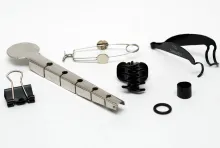
More than 3 years ago | More information on tube tools than you ever thought you needed - from the lowly sowing needle to the full-blown several-hundred-dollar vise, and a lot inbetween. This article teaches you essential knowledge about how to hold a tube - any tube - while tying on it.
|
|
Tube Ressources
Published: 2007-08-20
More than 3 years ago | Want to venture further into the world of tube flies? This list of material suppliers, tools, vises, DVD's, books and much more will give you links to many more hours of entertaining reading and viewing.
|
|
Tube Styles
Published: 2007-08-18
More than 3 years ago | If you think that a tube for a tube fly is a cylindrical piece of plastic, then you are in for a surprise. This article will present more tube styles than most fly tyers ever imagined, and probably teach even seasoned tubers a thing or two.
|
|
Tube Basics
Published: 2007-08-16
More than 3 years ago | This is the first article in the GFF Tube Fly Theme: An introduction to the concept of tube flies and some arguments for using tubes rather than hooks. The article will give you a basic knowledge about tube flies and prepare you for the rest of the theme.
|
|
Tube Fly Turmoil
Published: 2007-08-16
More than 3 years ago | Tube flies are flies tied on a tube rather than a hook. But putting it that simple is almost a crime, because tubes have evolved dramatically over the last few years, and bottles, rear tubes, Shomakov tubes, FITS tubes and all sorts of new systems have seen the light of day.
|
|
Tie a muddler
Published: 2007-07-14
More than 3 years ago | Martin Joergensen: "One evening when I was tying flies with a couple of friends, one of them, Nils, asked me to tie a muddler, just as a demo. I did. Luckily the other friend, Henning, was quick and caught these great pictures of the process."
|
|
HiVis CDC Midge
Published: 2007-05-01
More than 3 years ago | A high-visibility orange post and CDC makes this small dry perfect for your 7X tippet. Easy to tie, easy to follow on the water and a perfect choice when the fish are picky. Darryl Lampert from South Africa shows us one of his effective patterns.
|
|
Wiggle Jig Worm
Published: 2007-03-24
More than 3 years ago | Maybe you found the previously published tandem rag worm too tandemnised and would be better off with a one-hook-only fly.Then The Wiggling Jigging Worm shown in this article is a good alternative.
|
|
The Real Rag Worm
Published: 2007-03-21
More than 3 years ago | Every year in March and April the rag worms emerge from the bottom to secure the next generation. They swim freely in the water, wiggling from one side to the other. Sea gulls feed on the from above and many fish species seem to focus on them from beneath.
|
|
Eyes of Epoxy
Published: 2006-12-09
More than 4 years ago | Tired of buying eyes, that make your shrimps look great? They are expensive and yet it is hard to find the color you want or the right size. It is not complicated and a good pursuit during winter time.
Make your own in all sizes and colors you want.
|
|
Honey Shrimp
Published: 2006-12-09
More than 4 years ago | There are thousands of shrimp patterns in the world, made from the same template. This pattern is a time consumer, but it makes it more interesting tying shrimp flies. The eyes, proportions and legs gives this pattern some kind of magic.
|
|
Hen Hackle
Published: 2006-10-23
More than 4 years ago | Awhile back, I received a shipment of hen necks and saddles from Whiting Farms. The saddles struck me with their intense colors and solid web, then necks with their stem length and shortish barbs. These feathers were perfect for the wet flies I was working on.
|
|
Wasp Year
Published: 2006-08-22
More than 4 years ago | It has been a hot and dry summer in Scandinavia. Wasps have been a plague in many areas. They have been in every apple, every drink and every house. Some of them may have crossed a stream or river, winding up on the surface before continueing the rush. Some of them never left again.
|
|
Wingless Wets
Published: 2006-05-28
More than 4 years ago | On a shelf in the shop was a little book that was propped open. It was Leisenring and Hidy's The Art of Tying The Wet-Fly and Fishing The Flymph. Inside, I found a treasure of patterns and some fishing instructions and I suddenly switched gears and began fishing these great little flies.
|
|
Tool turning
Published: 2006-05-16
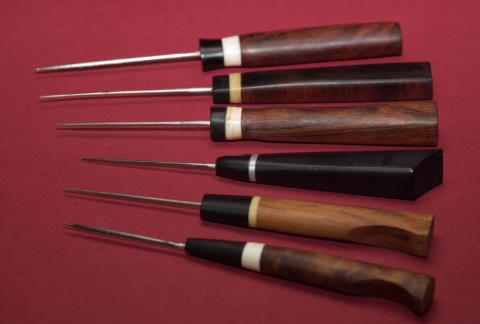
More than 4 years ago | Dutch Henk Verhaar finds that producing his own tools is just as satisfying as tying flies or building rods. Follow his small course in woodturning here and learn to turn hair stackers, bodkins and other beautiful tools in exotic woods
|
|
Czech Nymphing
Published: 2006-04-05
More than 4 years ago | The principle of nymph-fishing with Czech nymph is short-distance fishing, practically under the tip of the rod. The flyline is hanging under the tip of the rod and its end often does not even touch the water level.
|
|
Material shopping
Published: 2006-03-15
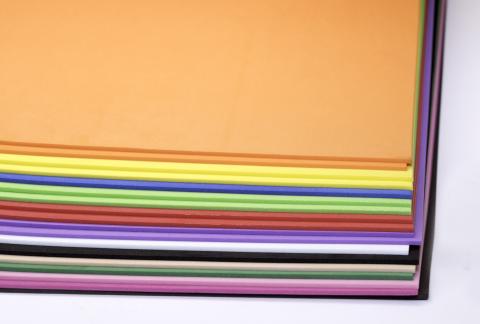
More than 4 years ago | Another podcast featuring GFF partner Martin Joergensen, this time pondering about the absurd prices of some fly tying materials - particularly synthetics, which can often be found on doll's heads, in craft stores and other places at a lot less than in your local flyshop.
|
|
Dogma framing
Published: 2006-03-12
More than 4 years ago | Framed flies can be pieces of art—both the flies and the framing. But creating your own framed flies is not that difficult. Follow these instructions and frame your first fly with few tools and few demands on routine and skill. You can develop it into art later.
|
|
Angel Body
Published: 2006-03-08
More than 4 years ago | Shiny tubing materials are widely used as body material on streamers. So is ordinary tinsel. Here is a new way of making glittering, but more volumnious, pulsating and living bodies for your streamers using Angel Hair or a similar material.
|
|
My Eyes!!
Published: 2006-03-04
More than 4 years ago | Painting eyes on streamers is nothing new, but as with any other tying procedure, there are some tricks that can help, and some pitfalls that should be avoided. This article shows you how to do it on-the-cheap with readily available materials.
|
|
The Cautery
Published: 2006-02-21
More than 4 years ago | Martin Joergensen writes: "I always wanted one of these tools. I have seen them used at fly tying shows and by a few tyers elsewhere, and found the tool to be an excellent companion for the lazy and sloppy fly tyer. Just my kind of tool!"
|
|
PeeMew Midge
Published: 2006-02-18
More than 4 years ago | In the vise, this pattern may not look exciting, but when wet, this fly takes on a whole new personality! It's a simple pattern for complex trout. Be sure to read Steve's "Tips for the Curious Fly Tier" which explains how this pattern came about and
|
|
OEDDS
Published: 2006-02-16
More than 4 years ago | How many of your flies work both in salt and fresh water? How many of these actually look like something real?
The Deep Diving Shrimp is such a fly. Oliver Edward's allround Gammarus imitation works equally well everywhere you find this very widespread animal.
|
|
Surf Candy
Published: 2006-02-12
More than 4 years ago | Experimenting with epoxy might glue you to the tying bench for hours, days, weeks. You can make highly durable, translucent baitfish imitations using synthetics and epoxy. Some years ago Bob Popovic's book "Pop Fleyes" introduced Kasper Mühlbach to the Surf Candy.
|
|
Flexible bench
Published: 2006-02-07
More than 4 years ago | German Jan-Ole Willers wanted to be able to clear his vice, tools and materials off the dining table for such unimportant events as lunch and dinner. That made him think out and build his own inexpensive portable fly tying bench. You can do the same.
|
|
Tying Station
Published: 2006-02-07
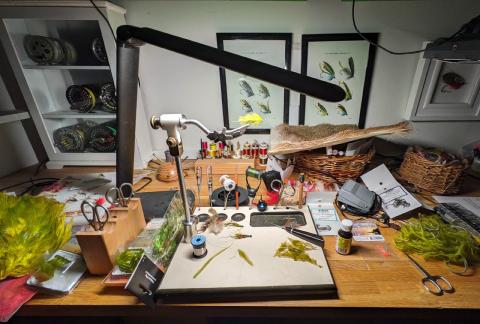
More than 4 years ago | A tying station is a small, mobile board where you can set up your vise and your tools, making it quick and easy to move your favorite tying spot around: from the dinner table to the TV to the office to... the bed? This article gives you some ideas on how to make one.
|
|
The Tabou Caddis Emerger
Published: 2006-02-06
More than 4 years ago | Made with only two materials, this highly effective caddis emerger pattern will take only minutes to tie and allow you to load up your fly box with Global Fly Fisher's hottest new pattern.
|
|
The Junior Mysis
Published: 2006-01-29
More than 5 years ago | A fly tied for sea trout in the Baltic area. It proved to be efficient in other places too. Translucent and yet colored. Tie it in olive, rusty or tan and you can imitate any camouflaged mysis—and it will stand out from the crowd. Can be tied by seniors too...
|
|
Fill-the-box
Published: 2005-12-14
More than 5 years ago | "I have severely neglected my day-to-day flybox for more than a year" writes GFF partner Martin Joergensen. Now he sets out to fill a box with hundreds of sea trout flies in preparation for the coming spring. He envisions rows of uniform and neatly arranged flies.
|
|
Hairwings & Tubes
Published: 2005-11-26
More than 5 years ago | With this book "Hairwing & Tube Flies for Salmon" Chris Mann has worked his way through yet another pile of flies sent to him from all over the world. And Chris Mann has done it again and provided us pattern-hungry fly tiers with a wealth of new patterns to inspire us.
|
|
Spey & Dee
Published: 2005-11-25
More than 5 years ago | GFF partner Martin Joergensen writes: "...the often lightly dressed Dee and Spey flies with their long and swung back hackles and low riding wings are just soooo fishy!". That's why he finds John Shewey's book "Spey Flies and Dee Flies - Their History & Construction" interesting.
|
|
How simple can it get?
Published: 2005-05-30
More than 5 years ago | Tying instructions? Materials list?!
You must be kidding me!
The list is close to being an insult and it is almost ridiculous to tell you how to create this fly in more than a sentence. This little saltwater fly is soooo simple.
|
|
DIY Epoxy Rotor
Published: 2005-03-17
More than 5 years ago | If you tie a lot of epoxy flies and have been glancing in the direction of the nice but expensive epoxy rotors in the local flyshop, you may want to consider building your own out of some scraps and a disco mirror ball motor.
|
|
Innovative Saltwater Flies
Published: 2004-11-15
More than 6 years ago | US based master fly tyer Bob Veverka has gathered together a whole bunch of very creative fly tyers to create a book that will appeal to all fly tyers, not just those who want to chase salty fish.
|
|
New Stuff
Published: 2004-09-20
More than 6 years ago | It all started when I had to toss my bottle of Pharamcist's Formula in the trash. Scanning the net for a suitable replacement, I found a husband and wife team that are producing a bunch of interesting products for fly fishers and tyers.
|
|
Spotless fly
Published: 2004-08-09
More than 6 years ago | The two spots in the name of this fly comes from the bait, which it is supposed to imitate: the twospotted goby. Gobies - which are much like sculpins - are an extremely common kind of fish in the shallow parts of all bodies of water - fresh and salt, still and running.
|
|
Tour de France
Published: 2004-07-25
More than 6 years ago | GFF partner Martin Joergensen has let one of his favorite sports events, the bicycling race Tour de France, inspire a way of tying flies. He argues why tying many identical flies can be a good thing - and can be better than tying many different flies.
|
|
Tying Emergers
Published: 2004-06-14
More than 6 years ago | Three hundred and forty four pages of emergers in this new title by Jim Schollmeyer and Ted Leeson. GFF partner Bob Petti concludes that if you have an interest in emergers, get a copy of this book. Leeson and Schollmeyer have done it again, as he writes.
|
|
C&F tube body tool
Published: 2003-08-15
More than 7 years ago | The C&F extended tube body tool is more than two darning needles in a fancy holder. If you - like Dutch Henk Verhaar - like doing it yourself, this might be worth looking into. The flies tied with extended bodies can become very realistic and still be simple to tie.
|
|
Better-Winged Olives
Published: 2003-04-11
More than 7 years ago | A recent tying binge left me with a few thoughts on how to tie a quicker and better blue-winged olive mayfly. The ideas aren't necessarily new, but they certainly are worth sharing.
|
|
Baby Buggers
Published: 2003-04-07
More than 7 years ago | Wooly buggers are one of the all time most effective fish catching flies. However, if you think you need heavy tackle and lots of lead to get them to work - think again. Peter Frailey tells about his "Baby Buggers", and how well they cast and fish.
|
|
Real Enough!
Published: 2003-01-16
More than 8 years ago | A bunch of quite realistic flies by a bunch of well known and unknown international tiers. These fantastic flies are not super realistic imitations, but they certainly look real and convincing enough to fool both men and fish!
|
|
Comparadone!
Published: 2002-11-09
More than 8 years ago | Comparaduns are one of the most versatile mayfly patterns in existence representing a low-riding mayfly to near perfection. However, many tiers shy this simple pattern due to the perceived complexity of tying the deer hair wings. Learn to master the technique with GFF partner Steve Schweitzer.
|
|
The Locofoam Story
Published: 2002-10-25
More than 8 years ago | Harrison Steeve's story about a brand new foam material for terrestrials and many other flies. "You guys are crazy to spend so much time messing around with that loco foam." Needless to say the name stuck. Read the whole story here.
|
|
Wash-n-Dry Dubbing
Published: 2002-10-24
More than 8 years ago | Make your dry fly dubbing in bulk quantities while washing your clothes! It's that easy! Harvest the fibers that come from you tumble dryer and prepare it for fly tying. Read the whole story by Steve Schweitzer here.
|
|
Hot melt glue
Published: 2002-10-20
More than 8 years ago | Epoxy is out! Hotmelt glue is in! When it comes to tying eggs and MOE blanks, this stuff is the new hot way to do it! Let our own Mad Scientist
teach you more...
|
|
Brush eyes
Published: 2002-10-18
More than 8 years ago | Shrimp patterns are always fun to tie. These salt water imitatoins are easy to do and fish well. Martin Joergensen has once again pursued the art of imitating these salt water arthopods — this time utilizing his family's hair brushes!
Read the story and find the patterns here.
|
|
Jungle Cock Repair
Published: 2002-10-18
More than 8 years ago | Prime Jungle Cock necks are rare to come by. Learn how 'upgrade' fishing quality JC necks in this article.
|
|
Hoppers with Foam
Published: 2002-09-20
More than 8 years ago | I’ll warn you now; the hopper is my favorite pattern. It’s big, I can see it, it’s fun to cast and present it with a plop, I have fun tying them and the fish just adore the big, juicy, summer delight. It’s perfect for my less-than-perfect casting habits. The pattern presented in this article is non-typical in my cache of fly patterns, however. This one uses a glued-on, pre-shaped foam body. Hence, the thesis of this article.
|
|
Wadington shanks
Published: 2002-09-14
More than 8 years ago | Classics in a classic way. These flies may look like something of today, but the concept of Wadington shanks is old as Methusalem. Danish fly tyer Niels Have has converted four classics to effective flies for early salmon and sea trout fishing. See the pictures and patterns.
|
|
Cluster Egg Fly
Published: 2002-05-01
More than 8 years ago | As you probably know the egg was way earlier than the chicken. This article show you how to make The Cluster Egg Fly (pom-pom eggs) - a very popular type of fly for steelhead and salmon.
|
|
A portable fly tying kit
Published: 2002-01-01
More than 9 years ago | In the most simplistic terms, a flytying kit must only have the tools and materials necessary to tie the flies you may use on a single trip or a single river. However, like most of us, a travelling flytying kit consumes more space than 26 high-schoolers crammed in a Volkswagen Beetle.
|
|
Anatomy of a salmon fly
Published: 2002-01-01
More than 9 years ago | Although each salmon fly pattern may call for its' own proportions and components, the following diagram and table identifies the standard anatomy and proportions used in salmon fly tying.
|
|
Flash tail
Published: 2002-01-01
More than 9 years ago | This simple method is also applicable for many other materials and situations. One that immediately comes to mind is the precise placement of tinsels or floss.
|
|
Good floss work
Published: 2002-01-01
More than 9 years ago | I’ve developed a habit instilled in me by my salmonfly tying mentors. When evaluating the salmon fly dressings of others, I look at the floss work first. It is a key characteristic that determines and shows the skills of the cream of the crop.
|
|
Hyperclomplete guide to fly tying
Published: 2002-01-01
More than 9 years ago | There are many intended uses for this guide, namely as reference to ensure you have a fairly complete compendium as to what you will need to get started in flytying or to use when dropping the perfect holiday gift hint. But more importantly, it is meant for the budding fly tyer, in hopes that the years of wisdom gained through trial and error from myself and my tying buddies will steer the newcomer down the right path
|
|
Muddler mania
Published: 2002-01-01
More than 9 years ago | It should be no secret that I'm a great fan of muddlers. These functional, characteristic and very beautiful flies that I connect directly with my favorite kind of fishing: night fishing for sea trout in the ocean. The technique used for tying them has always fascinated me, and although I do tie a lot of them, I still have a lot to learn in respect to spinning deer hair.
|
|
The Paraloop Way
Published: 2002-01-01
More than 9 years ago | I believe the highest complement one tyer can pay to another is to add the other's patterns to their own working set of flies. In that respect, I will be honoring Mr. Moutter many times this season and for years to come. Bob Petti passes along a global class score.
|
|
Thread control
Published: 2002-01-01
More than 9 years ago | If you ever saw skilled tyers tie, you'll probably have noticed that many of them keep spinning the bobinholder more or less vividly every time the let go of it. If you didn't notice, try looking the next time you see a 'pro' tie.
|
|
Tying a muddler
Published: 2002-01-01
More than 9 years ago | The most important step in preparation is getting the right kind of hair. Buy your hair at a reliable source. Good spinning hair patches are dense and have little underfur. The single natural hair should be dull and light at the base, slightly waved at the root, and have a short tapered tan/black tip section.
|
|
Whip fisnish with your hands
Published: 2002-01-01
More than 9 years ago | Whip finishing without a tool is not at all difficult. Lots of people use and praise the whip finishing tool which comes in many variations.
|
|
Applying dubbing
Published: 2001-01-01
More than 10 years ago | Dubbing must be said to be one of the most universal fly tying methods. Dubbing is mostly used for bodies, but will often form other parts of the fly as well. Using different materials and tighter or looser dubbing along with different techniques, can result in an amazing variety of body shapes and textures.
|
|
Bead chain eyes
Published: 2001-01-01
More than 10 years ago | You will see that many of the Danish saltwater flies -- The Magnus, Bjarke and Grey Frede are prime examples -- have bead chain eyes. These eyes serve two purposes: weight and imitation. The eyes till add quite a bit of weight in the front end of the fly and the balls obviously look like eyes. Their shiny surface even adds an attractive feature that will glimpse and get the attention of the fish.
|
|
Beads and eyes
Published: 2001-01-01
More than 10 years ago | Beads or eyes are added for one or both of two reasons: weight and appearance.
The eyes and beads discussed here are made from metal: brass, steel, lead - even tungsten. This will make them heavy and thus add weight to the fly. The weight will bring the fly down and often give it a certain behaviour - a diving or jigging motion.
But it will also add to the looks of the fly, the most obvious case being eyes added to fish or fry patterns like streamers.
|
|
Better tinsel bodies
Published: 2001-01-01
More than 10 years ago | How to tie a nice, even, ribbed tinsel body. Here's one way.
The description assumes that you want a silver body. If you want gold, just replace 'silver' with 'gold' below.
|
|
Blend your own dubbing
Published: 2001-01-01
More than 10 years ago | Almost everyone has the right stuff at their tying bench to make a great batch of dubbing. But not many people know they have everything they need to make an outstanding seal�s fur dubbing substitute. This dubbing is a viable replacement for SLF, angora goat and seal�s fur, and the trick to making it is so simple it will amaze you!
|
|
Bob's Big Magic Marker
Published: 2001-01-01
More than 10 years ago | Many of the old Scottish Spey and Dee type flies called for materials that are now illegal under numerous state, federal, and international laws. Other materials are available, but so expensive that they're not practical to use on fishing flies.
|
|
Cleaning fly tying material
Published: 2001-01-01
More than 10 years ago | Cleaning tying material
Why bother to clean your materials?
Bugs, dirt and chemicals are likely on the material
By Wayne Luallen
|
|
Coney flies
Published: 2001-01-01
More than 10 years ago | The flies on this page are all well known patterns which have all been juiced up a bit - many with some modern materials, but all with cone heads.
By Bas Verschoor
| |
Dyeing material
Published: 2001-01-01
More than 10 years ago | This small section with advice on dyeing fly tying materials was made after a discussion took place on the European fly fishing mailing lis. The text was put together from input from several people of this list: Graham Ward, John Davies, Pat Orpen and myself.
| |
Eyes from pearls
Published: 2001-01-01
More than 10 years ago | There are other ways than bead chain eyes to make eyes for a fly. Here are two ways: Copper thread and pearls and melted monofile.
|
|
Hook anatomy
Published: 2001-01-01
More than 10 years ago | Let's look at a hook, and try to put the right terms on the right parts. This picture shows a hook (note that it actually is a rare vertical eye hook, great for this purpose).
|
|
Make your own dubbing wax
Published: 2001-01-01
More than 10 years ago | When I recently reached the bottom of my last tube of Overton’s Wonder Wax, I decided to try making my own instead of buying one of the newer commercial dubbing waxes. Like a lot of other tyers I had made my own dubbing wax years ago, but I didn’t do it with a critical frame of mind.
| |
Mix your own dubbing
Published: 2001-01-01
More than 10 years ago | Making your own or improving store bought dubbing.
I recommend that all dubbing be passed through a coffee or spice grinder prior to using. The grinder tends to separate and air out the fibres providing a lighter product than would be normally accomplished by just using the blend out of the bag.
By David Allerton
|
|
Monofilament eyes
Published: 2001-01-01
More than 10 years ago | These eyes are actually quite easy to make, but can tease a bit if you want to do them both on the same piece of monofile -- which is the neatest way to do things.
|
|
Mustad hooks
Published: 2001-01-01
More than 10 years ago | "...my hats off to the folks at Mustad for having the ability and willingness to make a change." GFF partner Bob Petti has had a look at the new Mustad Signature series and parts wth a Global Class mark for the new, improved and very consistently produced hooks - with a naming convention, which is a blessing to fly tyers.
|
|
North Country flies on blind hooks
Published: 2001-01-01
More than 10 years ago | More than 30 years ago I tied some of the North Country Flies on blind hooks. At that time Veniard Ltd. had them in their catalogue - but I had no silk-worm gut, so I tied them to fine monofile nylon.
By Preben Torp Jacobsen
|
|
Palmer hackling
Published: 2001-01-01
More than 10 years ago | A way to palmer or body hackle
|
|
Picking hackle
Published: 2001-01-01
More than 10 years ago | Some thoughts on hackle
...or living with less than the best
By David Allerton
|
|
Rasing chickens
Published: 2001-01-01
More than 10 years ago | From feathers to chickens - and back again
You don't need to raise birds to get feathers, but it's both easy and fun.
|
|
Rotary vices
Published: 2001-01-01
More than 10 years ago | This section of Tie Better will deal with rotary fly tying vices. I will try to explain what a true rotary vice is, what its advatnages are and how it can be used in different steps of fly tying.
|
|
Selecting deer hair
Published: 2001-01-01
More than 10 years ago | Choosing the right hair will make your deer hair flies - Comparaduns, EHC's, Muddlers, bass bugs - much easier to tie.
By Chris Helm
|
|
Selecting hooks for saltwater
Published: 2001-01-01
More than 10 years ago | Fly hooks for Scandinavian salt water fishing
There are several considerations to make when choosing fly hooks for salt water fishing for sea trout.
By Martin Joergensen
|
|
The history of the gold bead
Published: 2001-01-01
More than 10 years ago | The gold bead flies that are now so popular, actually originated in the central part of Europe - more than 100 years ago.
By Roman Moser
| |
The Salmon Fly Proportion, Design & Layout Guide
Published: 2001-01-01
More than 10 years ago | The first rule of salmonfly tying is preparation...gathering your materials, laying them out and sizing up the situation. If you are like me, many times you will have one material that is just a touch too short and you scramble to make it fit. But in the long run, it will never fit and the fly that you meticulously hovered over for many precious hours has that major flaw. More importantly, you'll never be happy with the finished product. If only you had pre-planned and sized up your materials ahead of time.
|
|
Toilet ring dubbing wax
Published: 2001-01-01
More than 10 years ago | Here's a quick and simple way to make your own dubbing wax if you don't have the patience or confidence to custom blend your own.
| |
Tying on hard hair wings
Published: 2001-01-01
More than 10 years ago | When I talk about hard hair I both mean hair that's hard - like squirrel and polar bear - and hair that's hard to tie in on the hook. We all know the problem: not only is squirrel wings hard as #"¤%&/ to place properly on top of the shank, but they also sometimes seem to fall off for nothing.
|
|
Tying the Matuka style
Published: 2001-01-01
More than 10 years ago | Who would have guessed that a fly tied to fish the lakes of New Zealand would have such an impact all around the world?
By Bob Petti
| |
Bobs Garage
Published: 2000-01-01
More than 11 years ago | There is a story behind "The Garage". Not too long ago my wife and I were renting a two story house that had a tiny little room upstairs with no closet. Since we already had a spare bedroom for family visitors, this room was quickly claimed as the "Sports Room".
| |
George F. Grant’s Flies
Published: 2000-01-01
More than 11 years ago | George F. Grant’s flies utilize some very special techniques.
| |
Spey Hackles
Published: 2000-01-01
More than 11 years ago | I've been fascinated with spey flies for a long time. The first I had ever seen was a Purple Spey tied by Tim Purvis, which arrived in a swap of steelhead flies a bunch of us FF@'ers exchanged several years ago. The next was an Olive Spey tied by Juro Mukai in a swap of atlantic salmon flies.
|
|
Woodduck Flank
Published: 2000-01-01
More than 11 years ago | I have to admit a particular fondness for woodduck flank. Ever since I was given my first baggie of feathers from a duck hunting friend, I was smitten. The color - the texture - the barring of the feathers.
|
|
Cone head flies
Published: 1999-10-10
More than 11 years ago | A few early samples of Danish fly tyer Ken Bonde Larsen's cone head flies.
| |
Hen Hackle Demystified
Published: 1999-06-06
More than 11 years ago | Hen hackles have long been the source of confusion to many fly tyers. Whether they are looking for wings for their dry flies or hackles for their wet flies, there seems to plenty of head scratching when it comes time to purchase the appropriate feathers.
|
|
Hook selection
Published: 1999-02-01
More than 11 years ago | Hook comparison charts are at best fickle or at worst too confusing and inaccurate to use. It is critical to remember that this chart does in no way list equivalent hooks but attempts to list hooks based on similar applications.
|
|
Kluting
Published: 1998-06-01
More than 12 years ago | Kluting, a bottom seeking fly for pike, cod, pike perch and many other fish.
|
|
Wet fly hackle
Published: 1998-04-20
More than 12 years ago | Learn to tie a really classical wet fly hackle.
|
|
Visiting Partridge of Redditch
Published: 1997-09-15
More than 13 years ago | It is now more than a year ago since Mustad took over Partridge of Redditch. And I thought it might be of interest to you to have an update on the status...
|
|
Picric acid
Published: 1997-07-21
More than 13 years ago | Dyeing with picric acid yields colors between a gorgeous olive and an electric yellow.
|
|
Foam flies for panfish
Published: 1997-04-15
More than 13 years ago | I purchased a copy of Skip Morris' book on tying flys for bass and panfish and another of his books on foam flies. His books are excellent and I recommend them above all others for beginning tyers. The pictures and instructions are superb!
|
|
The anatomy of a feather
Published: 1996-08-30
More than 14 years ago | On order to be able to talk about our favourite passtime - fly tying - it's important that we use the same language. I hope to be able to clear the fog a bit in this area.
By Wayne Luallen
|
|
The nature of feather construction
Published: 1996-08-30
More than 14 years ago |
|
|
The nature of feather construction - Intro
Published: 1996-08-30
More than 14 years ago |
|
|
Hooks break
Published: 1996-06-06
More than 14 years ago | Hooks do break occasionally. It's a typical error when night fishing: you trust that everything is OK at the business end and just cast away
|
|
Feather Definitions
Published: 1996-04-01
More than 14 years ago | Definitions - The nature of feather construction.
|
|
Stacking material
Published: 1995-12-28
More than 15 years ago | When stacking materials it is important to consider it as consisting of more than just one process. There are several steps involved: material selection, cleaning and preparing, selecting the right tool and performing the stacking process itself.
By Wayne Luallen
|
|
Cleaning hair
Published: way back | A chapter in the article Hair Stacking and Other Applicable Stuff by Wayne Luallen.
|
|